Tell us about the job
Takes about a minute. No obligation.
A contractor quoting a boiler repair in Missaukee County will look hard at installation quality and service history before pointing at the weather. 37 severe weather events were recorded in Missaukee County, Michigan between 2015 and 2024. At that rate, severe weather is an event here, not a standing condition, and it does not account for most of what fails in a boiler. Cracked heat exchangers, failed controls, and worn circulator pumps trace back to how old the unit is and how consistently it was serviced. The weather record is real, but it is not what puts a boiler in Missaukee County on the repair list.
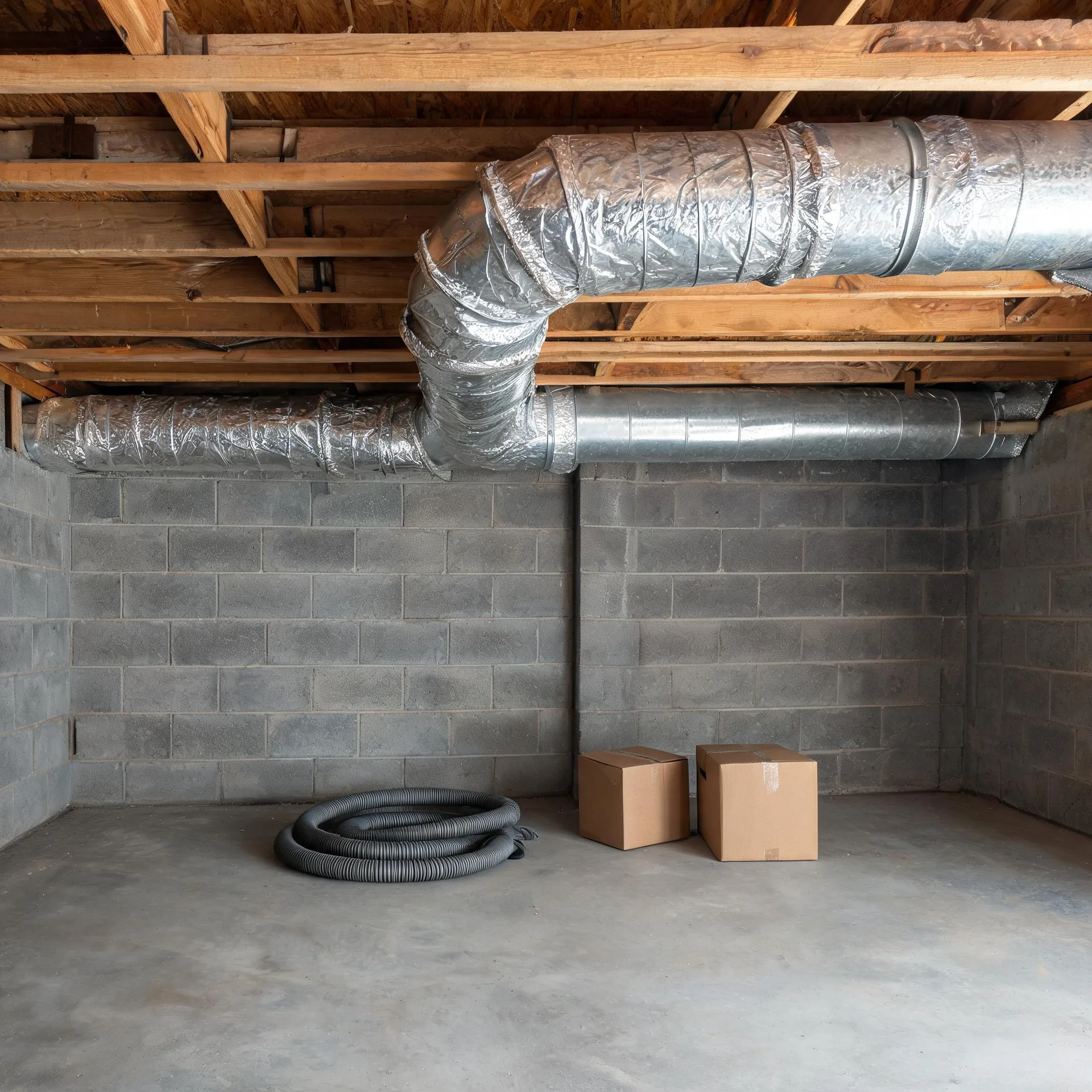
Boilers in this part of Michigan carry a specific repair history. Half the homes in Missaukee County, Michigan were built in 1980 or earlier (2020-2024 ACS 5-year). A system running in stock that old has been cycling through hard winters for a long time, and what matters once a contractor opens the unit is the condition of the heat exchanger and the seals, not the complaint that prompted the call. Corrosion, sediment, and fatigue show up on their own schedule, and the opened unit either has them or it does not. Parts availability for older boiler models also varies, so what the contractor finds inside shapes both the repair plan and what gets ordered.
The Parts of a Boiler a Contractor Checks First
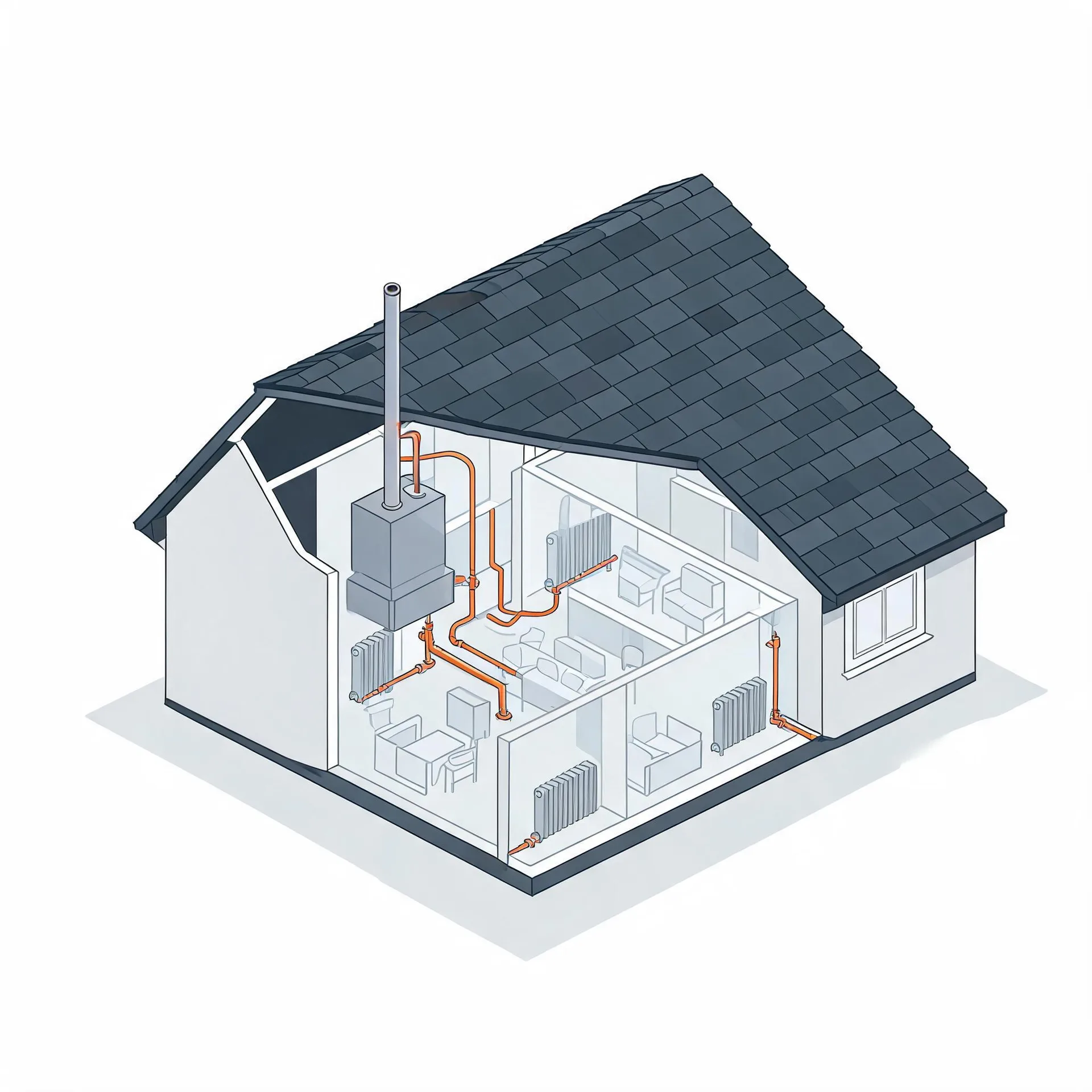
The boiler itself sits in the basement or a mechanical room and is the piece a contractor goes to first. Inside it, the heat exchanger and burner assembly are the core suspects when a system stops heating or starts cycling oddly. The circulator pump, mounted directly on the boiler, pushes heated water through the system and is a frequent point of failure when rooms stop getting warm.
From the boiler, supply and return pipes run through the house to the radiators or baseboard units in each room, and those terminal pieces are where a contractor checks for airlocks, stuck valves, or uneven heat distribution. The expansion tank, pressure relief valve, and zone valves sit close to the boiler and each one has a direct role in keeping the system at safe, steady pressure.
The drawing shows the general layout of a boiler system, and a licensed contractor determines which components and conditions apply to your specific house.
Find a contractor in Missaukee CountyMissaukee County, by the numbers
37 severe weather events were recorded in Missaukee County, Michigan between 2015 and 2024.
NOAA National Centers for Environmental Information, Storm Events Database, bulk CSV export, events 2015-01-01 through 2024-12-31.Half the homes in Missaukee County, Michigan were built in 1980 or earlier (2020-2024 ACS 5-year).
U.S. Census Bureau, 2020-2024 American Community Survey 5-Year EstimatesMissaukee County, Michigan holds 8,680 housing units (2020-2024 ACS 5-year).
U.S. Census Bureau, 2020-2024 American Community Survey 5-Year EstimatesOwners occupy 84.9% of the occupied homes in Missaukee County, Michigan (2020-2024 ACS 5-year).
U.S. Census Bureau, 2020-2024 American Community Survey 5-Year EstimatesBoiler Repair Rules & Standards on Record for Missaukee County, Michigan2 sourced rules and standards
Licensing Rules for HVAC Repair in Missaukee County, Michigan
Michigan issues the mechanical contractor’s licence by classification: HVAC equipment, ductwork, refrigeration, hydronic heating and cooling, and limited or unlimited heating and refrigeration service are each a separate classification a contractor has to hold.
Michigan requires a mechanical contractor’s licence: nobody may install, alter or service the regulated mechanical work unless they, or an employee, hold a licence from the department that has not been revoked or suspended.
Severe Weather Events in Missaukee County
Extreme weather puts a hard load on heating equipment, and boilers that run through Michigan's worst conditions wear differently than those that do not. How much stress the weather has placed on equipment in Missaukee County is part of what a local repair contractor accounts for.
37 severe weather events, 2015–2024. Source: NOAA National Centers for Environmental Information, Storm Events Database.