Tell us about the job
Takes about a minute. No obligation.
A boiler repair in Macomb County starts with what the system has already been through. 142 severe weather events were recorded in Macomb County, Michigan between 2015 and 2024. At that rate, severe weather is a standing feature of life here, and its cumulative load on a boiler shows up in specific places: heat exchangers that have cycled hard, seals that have dried and cracked, and expansion tanks that have been pushed repeatedly. A contractor pricing a repair here does not assume age alone drove the failure. They check what the load history produced first.
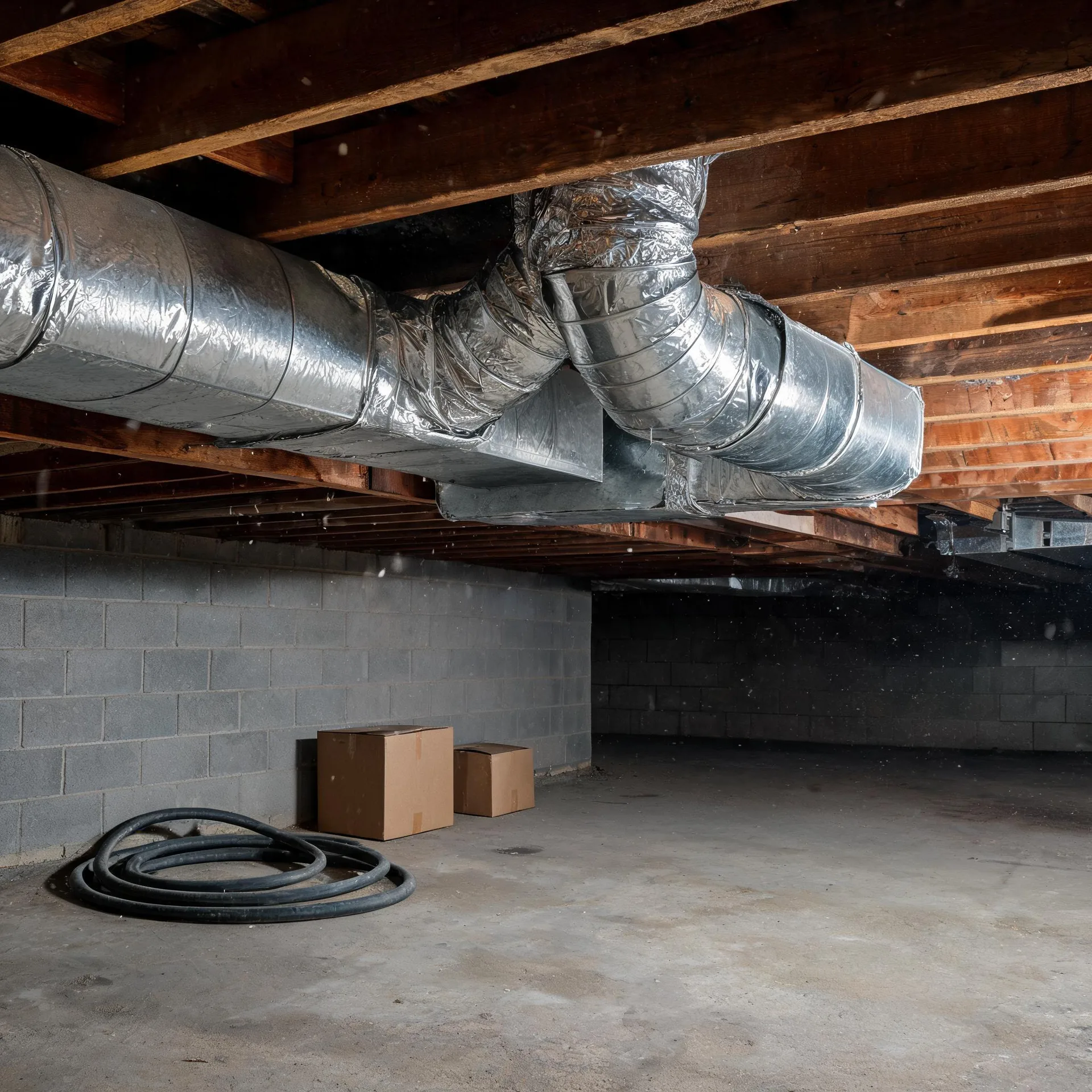
Pipes corrode from the inside, zone valves get bypassed, and expansion tanks lose their charge long before a boiler itself gives out. Half the homes in Macomb County, Michigan were built in 1975 or earlier (2020-2024 ACS 5-year). In a house built that long ago, a contractor opening the system finds conditions that reflect every owner and every winter the distribution loop has seen: sediment settled in low points, bleed valves that have not moved in years, and pressure relief hardware that may have been replaced or may not. Those findings set the scope. A boiler swap or a component repair that looks straightforward from the outside gets re-priced once the loop is flushed and the full system is visible.
The Parts of a Boiler a Contractor Checks During Repair
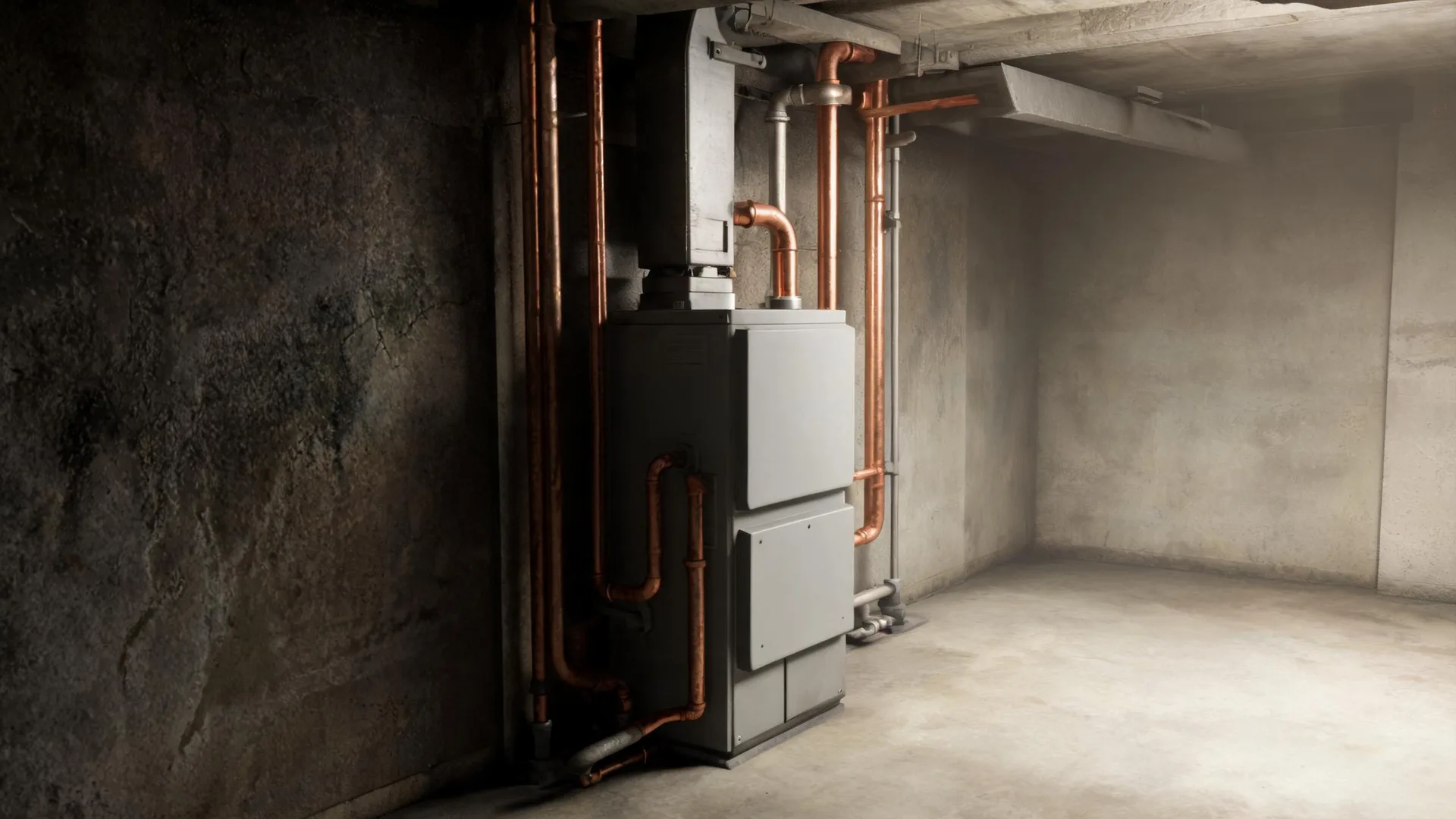
The boiler itself sits in the basement or a mechanical room and is the piece a contractor goes to first. Inside it, the heat exchanger and the burner assembly are the components most likely to be behind a breakdown. A failed pressure relief valve, a worn circulator pump, or a cracked heat exchanger will each produce its own symptoms, and a contractor reads those symptoms to know where to look.
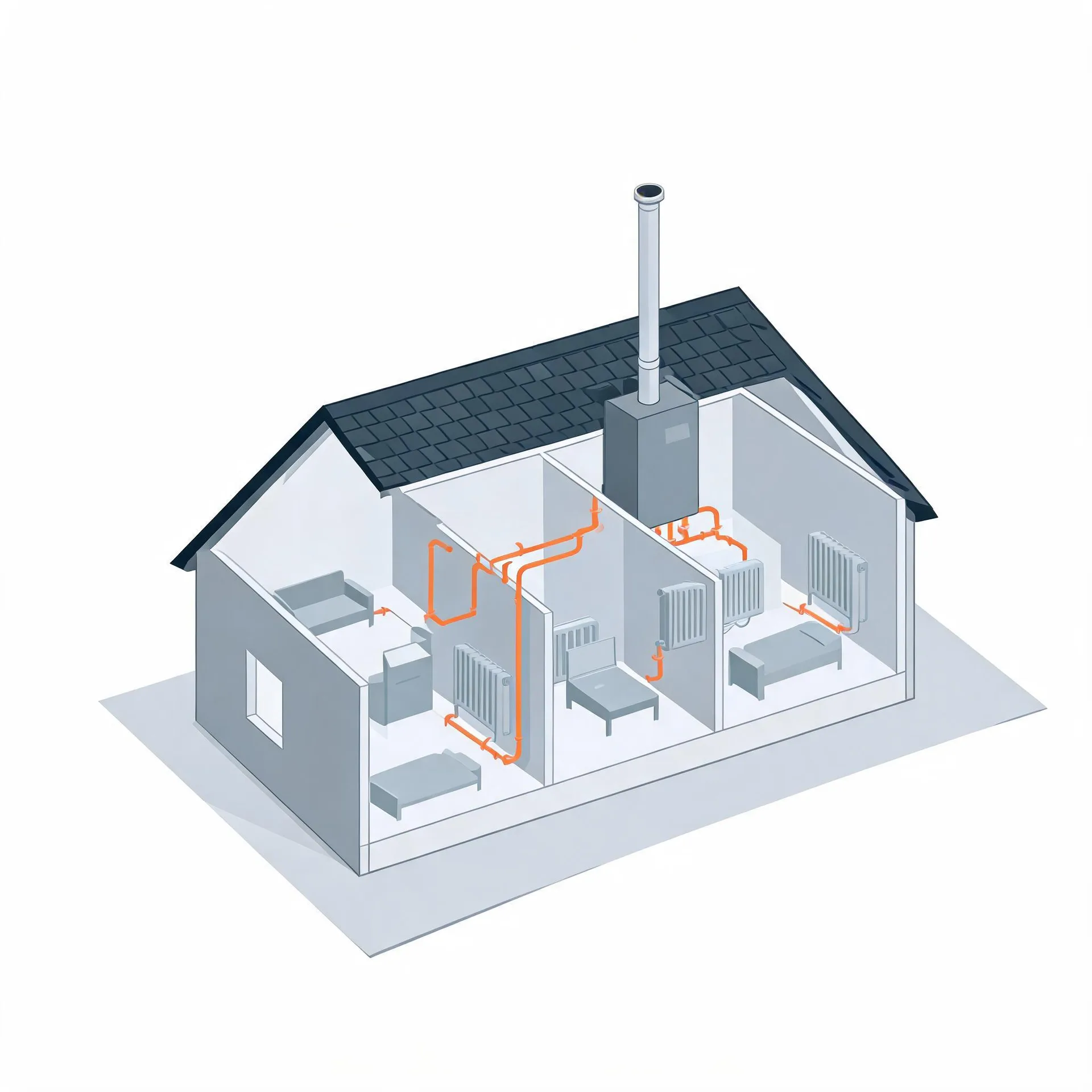
From the boiler, supply pipes carry hot water to radiators or baseboard units throughout the house, and return pipes bring the cooled water back. The expansion tank, the aquastat, and the zone valves sit along that loop and each one has a specific job. When one fails, the rest of the system either overworks or stops responding, which is why a contractor traces the loop rather than replacing parts at random.
The drawing shows a typical boiler system layout, and a licensed contractor determines which components apply to your specific house and what work each one needs.
Find a contractor in Macomb CountyMacomb County, by the numbers
142 severe weather events were recorded in Macomb County, Michigan between 2015 and 2024.
NOAA National Centers for Environmental Information, Storm Events Database, bulk CSV export, events 2015-01-01 through 2024-12-31.Half the homes in Macomb County, Michigan were built in 1975 or earlier (2020-2024 ACS 5-year).
U.S. Census Bureau, 2020-2024 American Community Survey 5-Year EstimatesMacomb County, Michigan holds 373,413 housing units (2020-2024 ACS 5-year).
U.S. Census Bureau, 2020-2024 American Community Survey 5-Year EstimatesOwners occupy 75.0% of the occupied homes in Macomb County, Michigan (2020-2024 ACS 5-year).
U.S. Census Bureau, 2020-2024 American Community Survey 5-Year EstimatesBoiler Repair Rules and Codes for Macomb County, Michigan2 sourced standards and laws
Licensing and Legal Requirements in Macomb County, Michigan
Michigan issues the mechanical contractor’s licence by classification: HVAC equipment, ductwork, refrigeration, hydronic heating and cooling, and limited or unlimited heating and refrigeration service are each a separate classification a contractor has to hold.
Michigan requires a mechanical contractor’s licence: nobody may install, alter or service the regulated mechanical work unless they, or an employee, hold a licence from the department that has not been revoked or suspended.
Severe Weather Events in Macomb County
Extreme weather puts direct stress on heating equipment, driving the kinds of failures and accelerated wear that bring repair calls. Boiler demand in Macomb County follows what the weather does here, which makes local conditions a practical matter for anyone keeping a system running.
142 severe weather events, 2015–2024. Source: NOAA National Centers for Environmental Information, Storm Events Database.