Profile view of a bearded man wearing a black baseball cap and a dark gray T-shirt against a plain light background.

How to bleed radiators before a Michigan winter

Step 1 of 3: Equipment

How do I bleed my radiators before winter hits in Michigan?

You're about to get cold weather, and a boiler that ran fine last March can still have a radiator or two that stays cool at the top while the bottom gets hot. That usually means air trapped in the system, not a dead boiler. Before the furnace works overtime once temperatures drop, it's worth finding out if bleeding is all that's needed.

Open the bleed valve on each radiator until water runs out steady

Every radiator has a small valve, usually a square or slotted fitting near the top on one end. With the boiler off and cool, turn that valve with a key or screwdriver until you hear air hissing out. Keep a cloth under it, because water follows once the air clears, and that's your sign to close the valve. Work through every radiator in the house, not just the cold one, since air can settle in more than one at a time. Once each one is bled, check the boiler's pressure gauge. Letting air out drops the pressure, and most boilers need it brought back up before they'll heat properly through a Michigan winter.

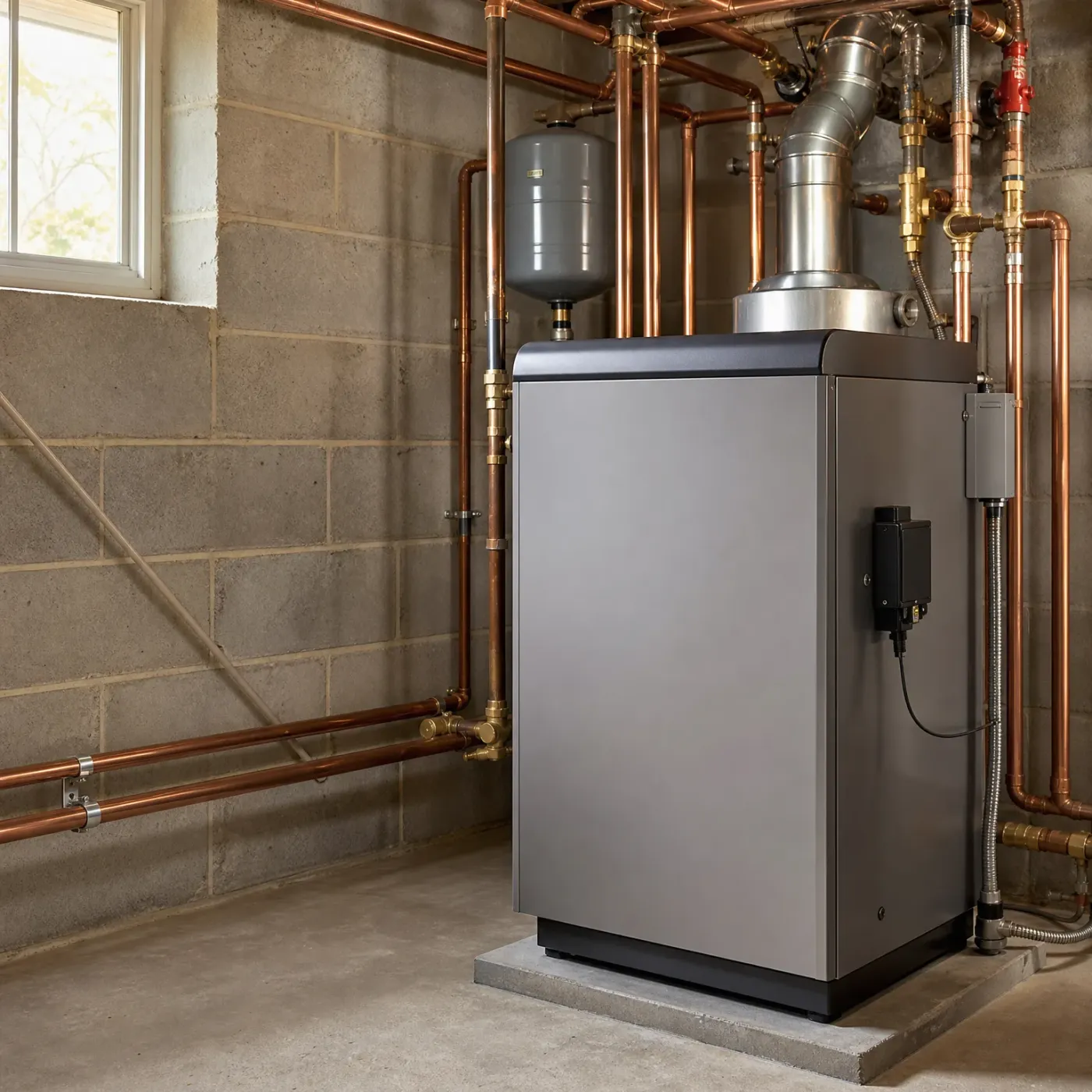
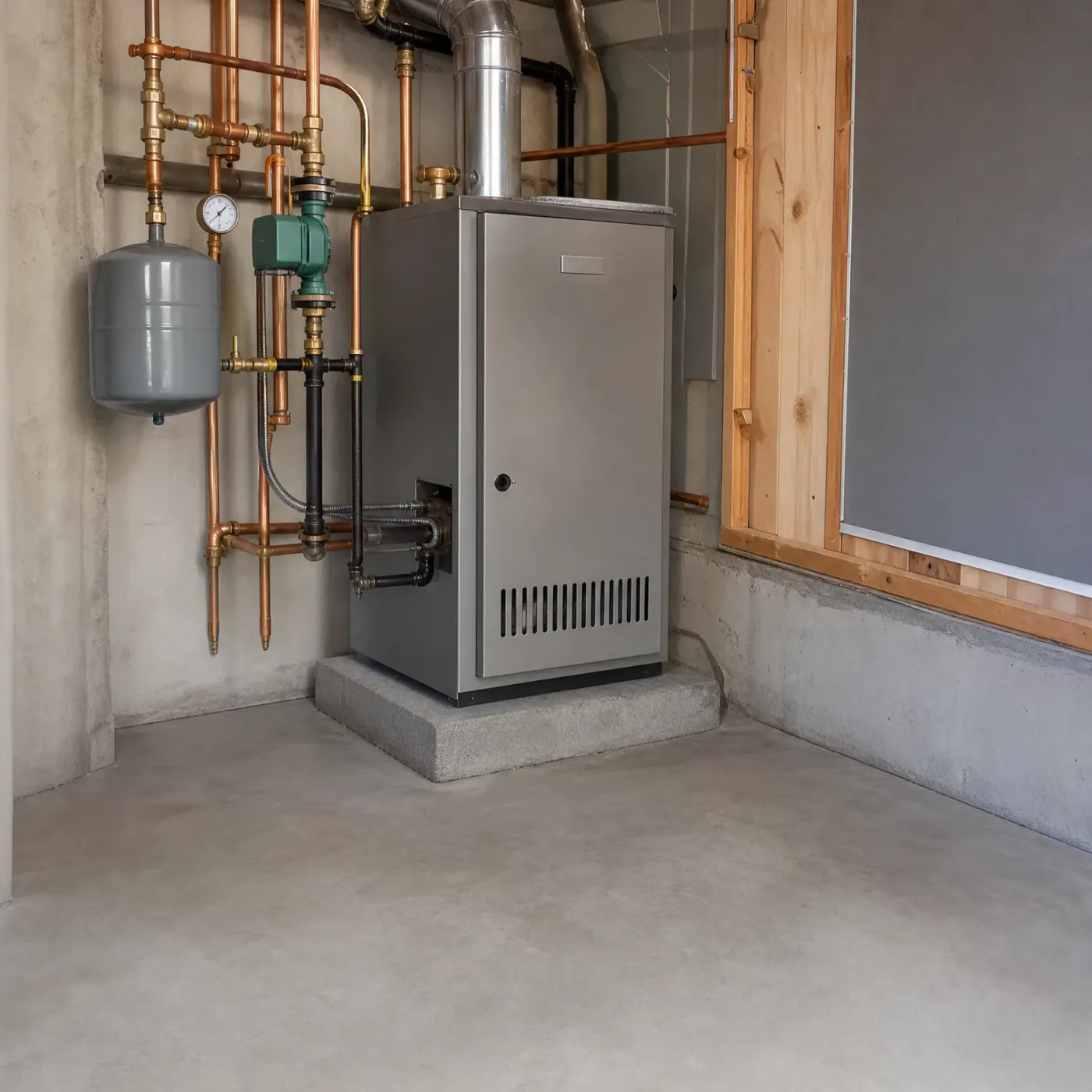
A gray boiler on a concrete pad in a basement corner, connected to copper and black pipes with a gauge, circulator pump, and gray expansion tank, beside a wood-framed wall.

What a bled system looks like

Pressure holds steady on the gauge. The pump runs quiet, the expansion tank does its job, and every radiator in the house heats evenly from top to bottom. This is what a boiler looks like when there's no air working against it.

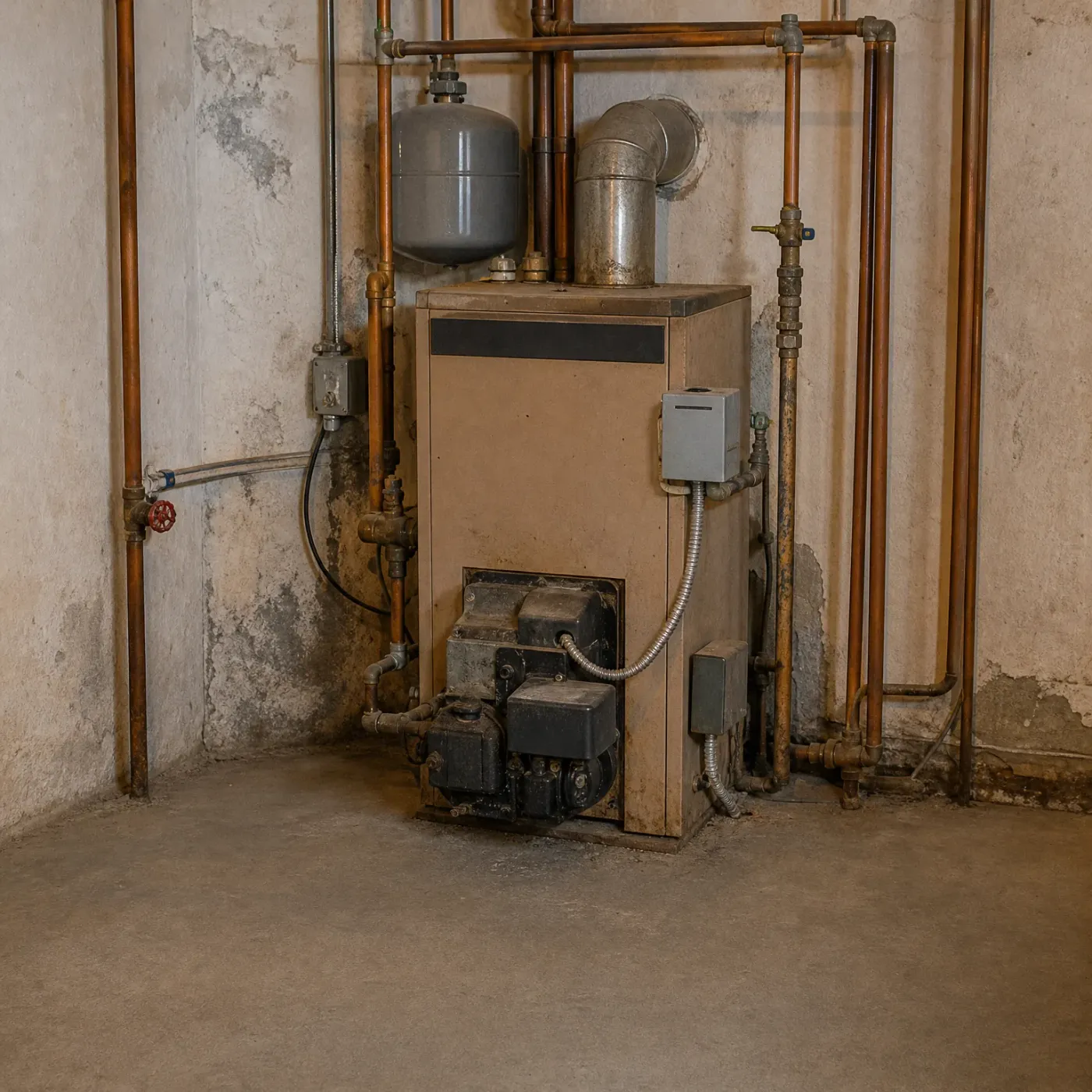
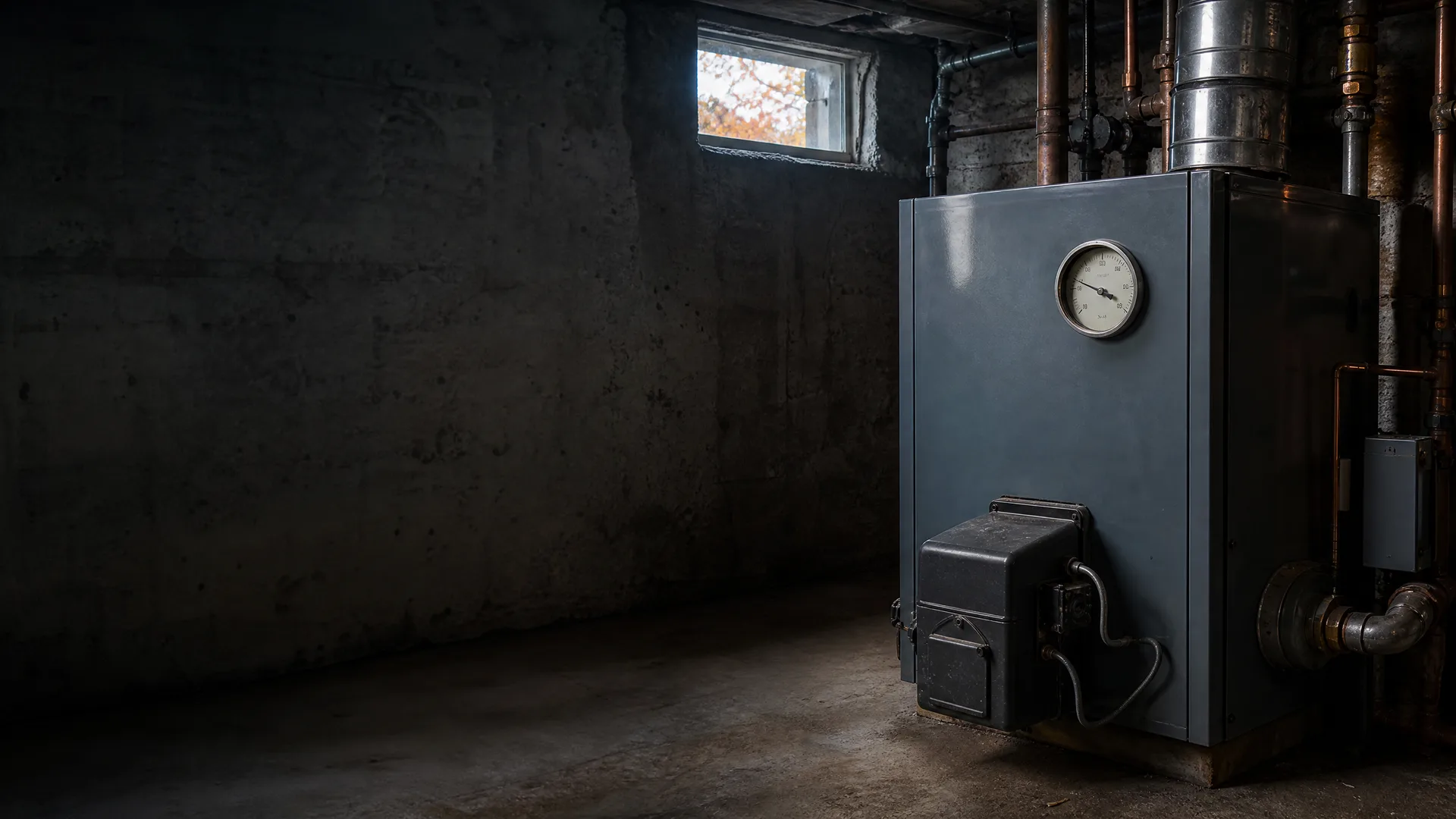
An older oil-fired boiler with a burner unit, flue pipe, expansion tank and copper piping stands in the corner of a concrete-floored basement with weathered plaster walls.

What trapped air does over time

Air pockets force the pump to work harder and can leave pipes knocking or a radiator that never fully heats. Left alone through a Michigan winter, that strain adds up on a system that's already running long hours.

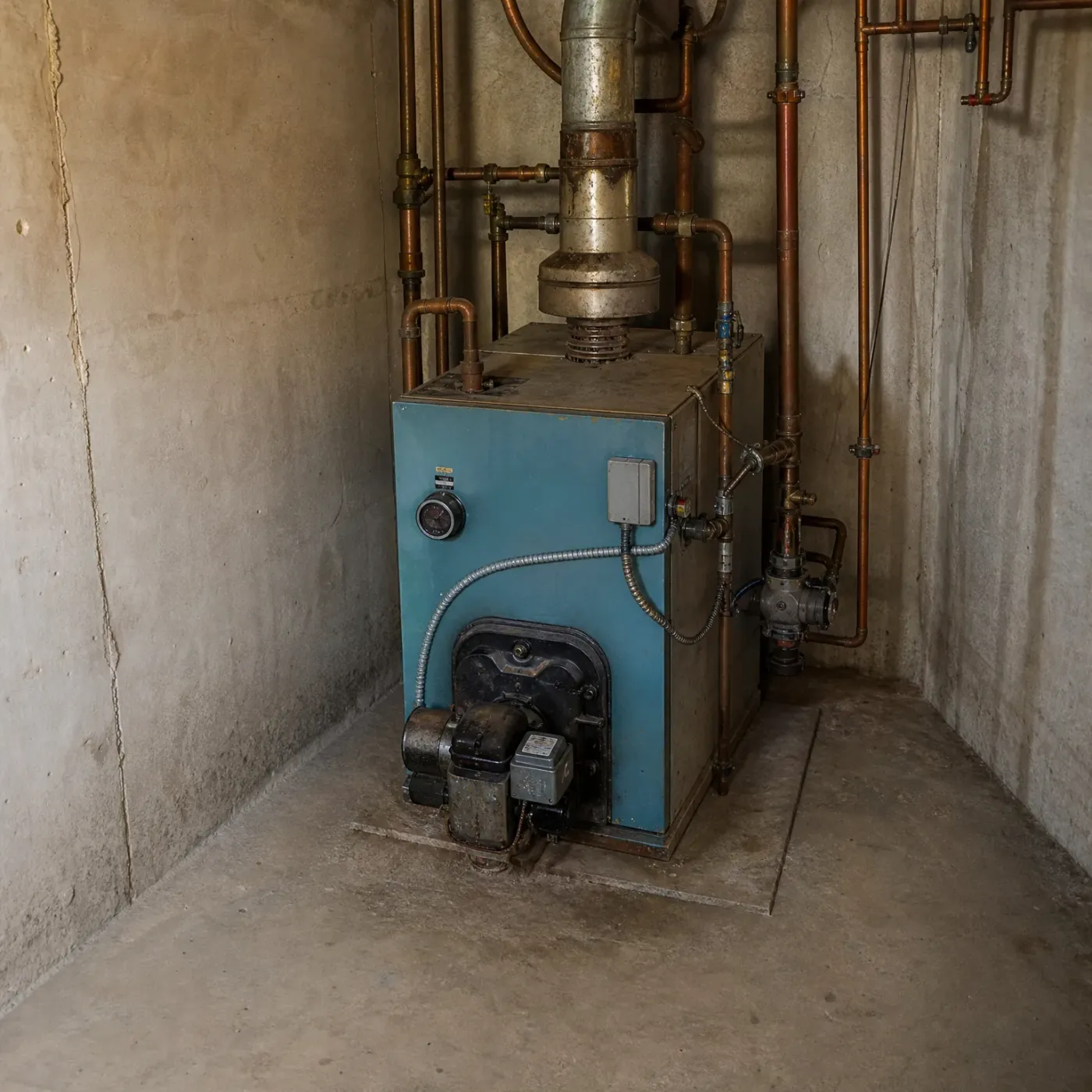
A blue oil-fired boiler with a burner unit and pressure gauge stands in a concrete basement corner, connected to copper pipes and a metal flue.
Before you get your boiler maintenance
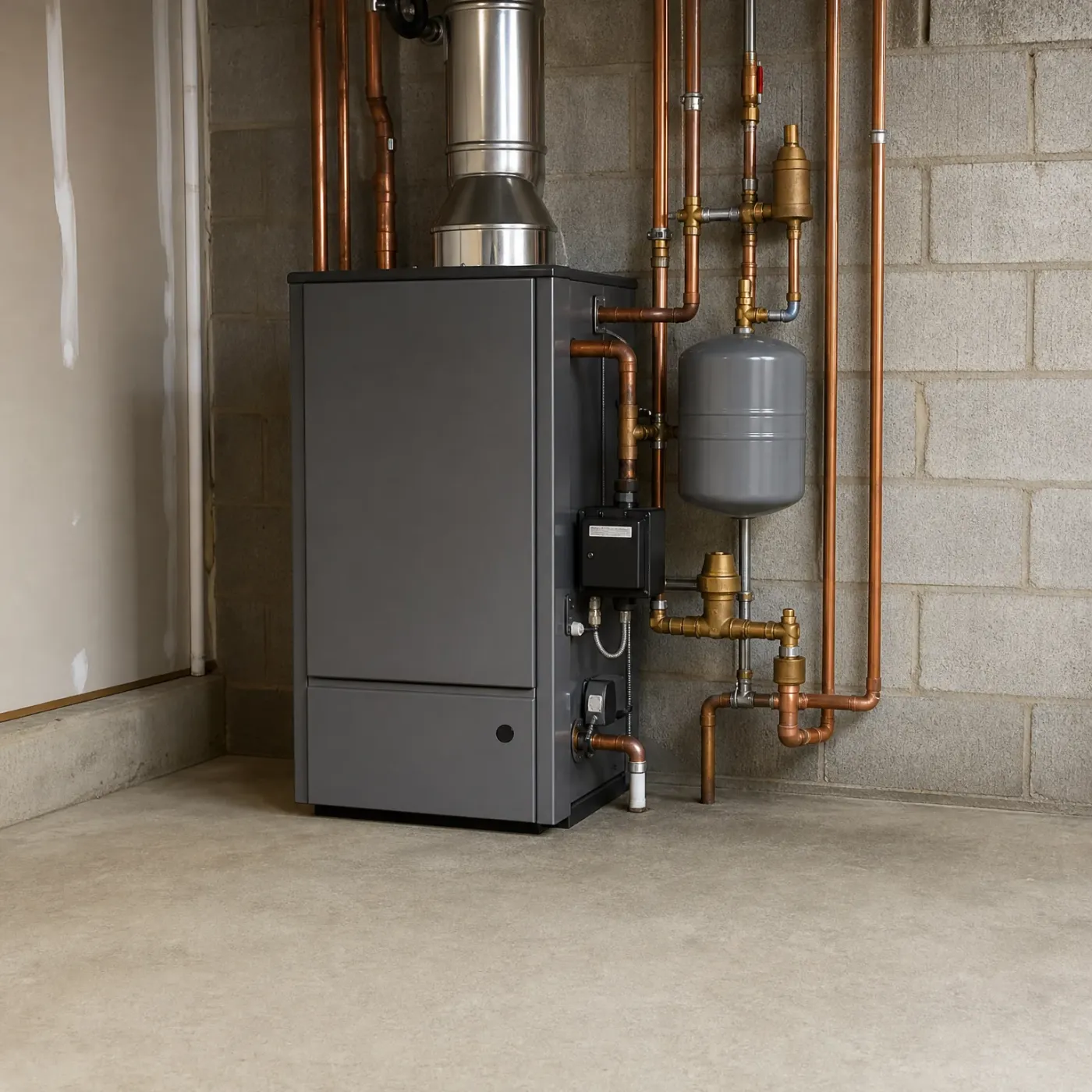
A gray floor-standing boiler with a metal flue stands against a concrete block wall, connected to copper pipes, brass valves and a gray expansion tank, on a bare concrete floor.
After you get your boiler maintenance

A radiator that stays cool at the top means the boiler is working harder to heat the same room, and that shows up on your gas bill before you notice the cold spot. Michigan power rates make the pump and controls worse to run inefficiently too, so trapped air costs you on both ends of the system. Leave it long enough and the pump can start working against that pocket of air every cycle, which wears on it faster than it should. Some rooms end up warm while others stay stubborn, so you turn up the thermostat to compensate, and now the whole house is paying for one bad radiator. None of this fixes itself once the cold settles in for good. A boiler that's fighting trapped air in January is a harder job than one caught in October, and a system checked over before the heat really kicks in tends to run the rest of the winter without surprises.

Winter nights average 19°F statewide

At 19°F overnight, your boiler is running most of the night just to hold a room temperature, not cycling on and off like it would in milder weather. A radiator with trapped air can't keep up at that kind of demand, and you'll feel it as a room that never quite gets warm no matter how high you set the thermostat.

NOAA nClimDiv 1991-2020 county normals weighted by homes

  1. Shut off the boiler and let the system cool down.

  2. Find the bleed valve near the top of the radiator.

  3. Fit the key and turn slowly until air hisses out.

  4. Close the valve the moment water starts to dribble out.

Why does one room never quite get warm?

Walk the house with your hand on each radiator. One might be hot across the top and warm at the bottom, which is normal. Another stays cold at the top no matter how long the boiler runs, and that's the one with air trapped inside it. You'll notice the room around it runs a few degrees cooler than the rest of the house, and the thermostat keeps calling for heat without the room catching up. Some owners hear a gurgle or knock from the pipes near that radiator too. Left alone through a Michigan winter, that radiator keeps underperforming and the boiler keeps cycling longer to compensate, which is wear on a system you'd rather have rest when it can.

A gray-haired bearded man in a dark coat and scarf dusted with snow stands smiling in a dimly lit entryway with a white front door, a side table with a lit lamp, an oval mirror, and a patterned rug.
An older bearded man in a dark snow-dusted coat and gray scarf stands just inside a dimly lit home entry, with a framed picture, lit table lamp, and an adjoining room with a fireplace behind him, and snow visible through the open door.
A gray-haired, bearded man in a dark snow-dusted coat stands smiling in a dimly lit entry hall with a staircase, a lit table lamp, a framed picture, and a living room visible through a doorway.
An older man with gray hair and a beard, wearing a dark jacket dusted with snow, stands smiling in a dimly lit hallway with lamps and a living room visible behind him.
A gray floor-standing boiler on a concrete pad in a basement with concrete block walls, connected to copper piping, a flue vent, and an expansion tank.

A local pro for your boiler maintenance

Your request goes to one pro, not a list of companies.

Say what's going on with your boiler, and a pro who works on them reaches out.

Find a boiler pro

Sending the form costs nothing.

A woman wrapped in a thick beige fleece blanket sits on a sofa with an open book on her lap, beside a lit table lamp, with a frost-covered window behind her.
A gray-haired woman in a cream knit sweater stands in a dimly lit kitchen at night, looking to her right, with a round loaf of bread in the foreground and a dark window and potted plant behind her.
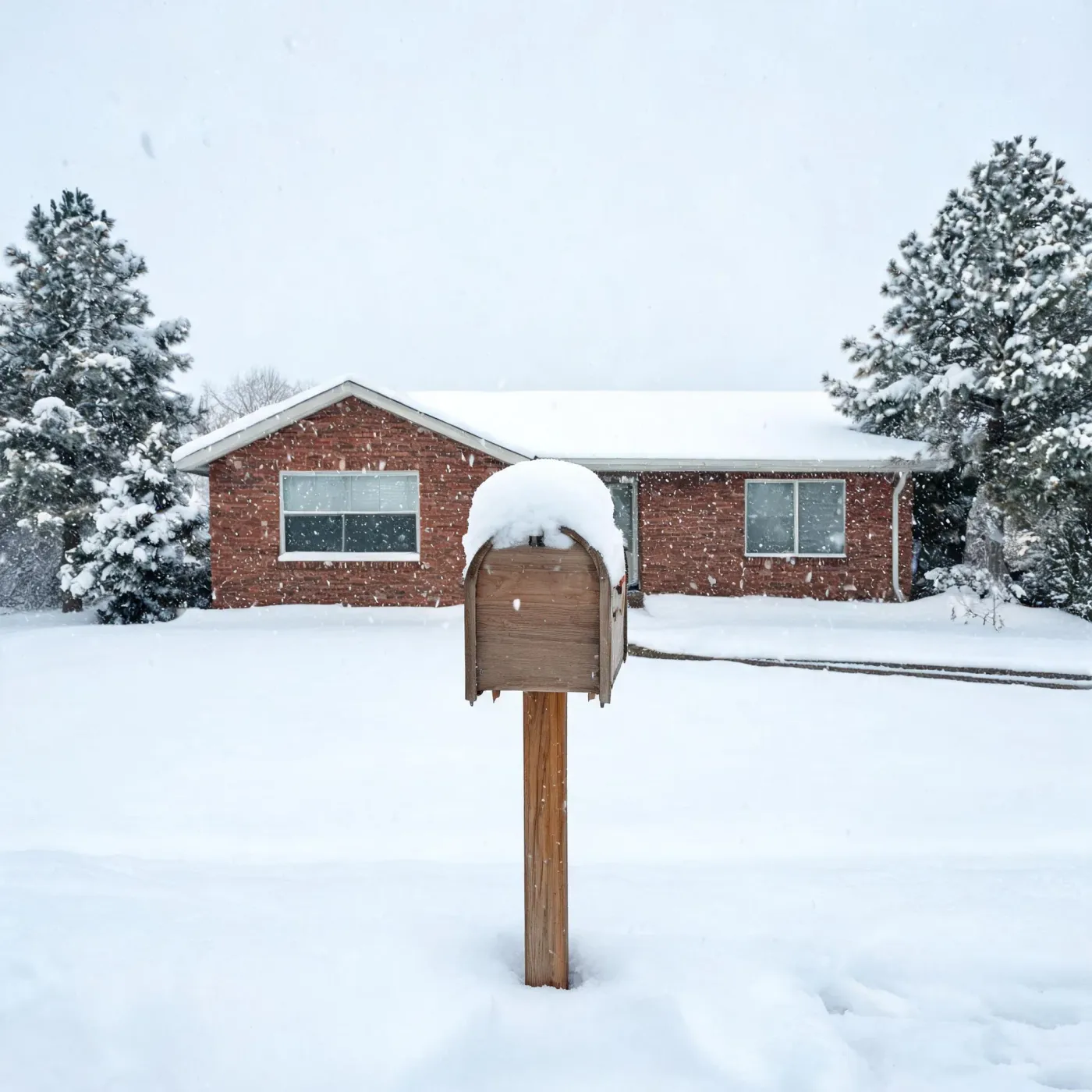
A wooden mailbox on a post topped with a thick layer of snow stands in a snow-covered yard in front of a single-story brick house with a snowy roof, flanked by snow-laden evergreen trees during falling snow.

Statewide, winter nights average 19°F, and a boiler with air trapped in a radiator has no slack to work with at that temperature. It runs long stretches just to hold the house steady, and the cold spot you felt in October turns into a room you give up on by January. Bleeding the radiators before that cold sets in means the boiler is only fighting the weather, not a radiator working against itself too. Once the air is out, that same overnight run holds the room instead of losing ground to it. Source: NOAA.

NOAA nClimDiv 1991-2020 county normals weighted by homes

Bleed it yourself or call a contractor

Bleed it yourself

  • You need a radiator key, a cloth, and a little patience, and most people already have the first two.
  • You control the timing, so you can do it on a weekend afternoon before the first hard freeze.
  • It's a job you can repeat each fall without waiting on anyone else's schedule.
  • If the valve is seized or stripped, you'll find out mid-job with water or air still trapped inside.
  • You won't get a read on the boiler pressure or the expansion tank while you're at it, so a bigger problem can sit there unnoticed.
  • Doing it wrong, like closing the valve too late or too early, can mean air stays trapped in that radiator anyway.

Have a contractor check it

  • A local contractor who works on boilers all winter knows which radiators in older Michigan homes tend to trap air first.
  • Bleeding gets done alongside a check of system pressure, the pump, and the expansion tank, so nothing gets missed.
  • A seized or corroded valve gets replaced on the spot instead of becoming next year's problem.
  • You get matched with one contractor, not several companies calling, so there's no juggling quotes or schedules.
  • Someone who services this equipment every season recognizes the early signs of a failing part before it leaves you without heat.
  • It takes the job off your list during the weeks when the boiler is running hardest.
A gray boiler with a round pressure gauge and copper and metal pipes stands in a dim concrete basement lit by a small window.

The basement is cool enough now that you notice it on the stairs. Outside it's an October afternoon, gray, the kind that turns into frost by morning. You crouch by the boiler and check the round gauge on the front. The needle sits low, under where it should rest. You tap the glass once out of habit. It doesn't move. Upstairs the radiator in the back bedroom has been cold at the top for a week, and you've been meaning to get down here with the key. The burner clicks on behind you, and you can hear it start working harder than it should have to, just to push heat through a system that's got air sitting where water needs to be.

A man seen from behind raises his hand to wave at a woman standing in the open front doorway of a single-story house with gray shingle siding, white columns and a gabled porch entry.

Bleed the radiators now, before the cold settles in for good

Bleeding a radiator takes a key, a cloth, and a few minutes of patience. If you've walked the house and found the cold spots, you know which ones need it. Do that now, while it's still easy to open a window and let the house air out, and your boiler will run the way it's supposed to once the hard freezes start.

If you'd rather have someone else take care of it, or if the pressure gauge still looks low after you've bled every radiator, that's a sign worth having a second pair of eyes on. A local contractor who works on boilers all winter has seen which valves seize up and which gauges run low for reasons that aren't about air at all. Get matched with one who knows this equipment, and they'll reach out to sort out what your system needs before the first real freeze hits.

A gray upholstered sofa with a textured cushion sits beside a dark round side table holding a vase of green foliage, with a table lamp and sheer-curtained window behind.
A wooden front door with six small glass panes and a narrow sidelight, set in a shingled house entry with white trim, reached by stone steps flanked by a planted urn with purple flowers and leafy branches in the foreground.
Exterior corner of a house with beige horizontal lap siding and a black-framed window, with white hydrangeas, ornamental grasses and low plantings along a flagstone patio.
Corner of a house with tan lap siding and a window, a brick step edge, flowering white hydrangeas and green shrubs beside a flagstone walkway leading to a white picket fence and a tree in backlit sunlight.
House exterior with cream horizontal lap siding, a dark-framed window, a black wall lantern beside a wood door, potted shrubs on stone steps, and white and pink hydrangeas in the foreground garden.
Corner of a cream lap-sided house with a white-framed window and dark shingled roof, beside a white-flowering hydrangea shrub, a clipped hedge, mulched bed and lawn.

Get the right pro for your boiler

The pro who reaches out is licensed in Michigan.

Get a local pro

You're not committing to anything by asking.