A local installer who puts in boilers gets your project.
Michigan winters run long, and your boiler is probably working from October clear through April. Gas heats most homes here, so that furnace or boiler bill is the one that stings. If yours is getting old, you have probably wondered whether a high-efficiency model would actually make a dent in it.
It can, but how much depends on what you have now. A boiler from the 80s or 90s might be running at 65 to 75 percent efficiency, meaning a quarter or more of the gas you pay for goes straight out the flue. A high-efficiency condensing boiler recovers much more of that heat before it leaves the house. Over a Michigan winter, that difference shows up on the bill every single month, not just on the coldest days.
Power here costs more than in a lot of states, which is part of why gas heat makes sense for most homes. It also means that any part of your heating that relies on electricity, like an old boiler's draft setup or a backup system, is worth a second look. The right boiler for your house depends on its size, your gas line, and how your current system is set up, and that is not something to guess at from a chart online.
This is where getting the right answer matters more than getting a fast one. A contractor who actually looks at your boiler, your home's heating load, and what your venting can support will tell you whether a high-efficiency unit makes sense for your house specifically, or whether your money is better spent elsewhere.
Once you send the form, that part stops being your problem to solve alone. You will be matched with a contractor who handles installations like yours, and they will reach out to you directly. No more researching models on your own or guessing at what fits your house.
Yes, for most Michigan homes a high-efficiency boiler is worth the switch. A standard boiler runs at 80 to 85 percent efficiency, meaning 15 to 20 cents of every gas dollar goes straight out the flue. A high-efficiency condensing boiler runs at 90 percent or higher, pulling more heat out of the same flame before venting the rest. In a state where that boiler fires for seven months straight, that gap shows up on every bill from October through April, not just a few of them. The math works harder here than it would somewhere with a short, mild winter, because the equipment runs so many more hours. Condensing boilers also vent through PVC pipe instead of a metal chimney, which matters if your flue is old or was sized for a different unit. If your boiler is on its last stretch, replacing it with a high-efficiency model is the point where that gas bill actually gets smaller instead of just getting replaced.
Before you get your boiler installationAfter you get your boiler installation
A standard boiler sends its exhaust straight up the flue, and a lot of the heat you paid for leaves with it. A condensing boiler makes that exhaust do one more job first. It routes the gas through a second heat exchanger before letting it go, pulling out heat the standard design wastes. That extra step cools the exhaust so much it condenses into water, the same way a cold glass sweats on a summer day. That water has to go somewhere, so a condensing boiler drains out through PVC pipe instead of running up a metal chimney. The condensate is acidic, so the drain line and trap are built to handle it without corroding over time. There's a second difference worth knowing. The burner doesn't just fire at full output every time it kicks on. It modulates, running at a lower rate on a mild day and ramping up only when the house actually needs it, instead of blasting full heat on a 40 degree afternoon in October the same way it would on a January morning.
How a Condensing Boiler Works
A standard boiler burns gas and vents the hot exhaust straight up the flue, carrying heat outside with it.
A condensing boiler runs that exhaust through a second heat exchanger first, pulling out heat the standard design throws away.
Pulling that extra heat cools the exhaust enough that it turns to water, which is why a condensing boiler drains through a PVC pipe instead of a metal flue.
Because the exhaust runs cooler, a condensing boiler vents through PVC pipe out a side wall instead of a chimney.
The burner in a condensing boiler modulates, firing at a lower rate on a mild January day instead of running full blast every cycle.
That condensate is acidic, so the drain line and the trap it runs through have to handle it without corroding.
Send the form and stop researching installers for the new boiler.
Asking costs nothing, and the choice to hire stays yours.
A standard boiler doing its job
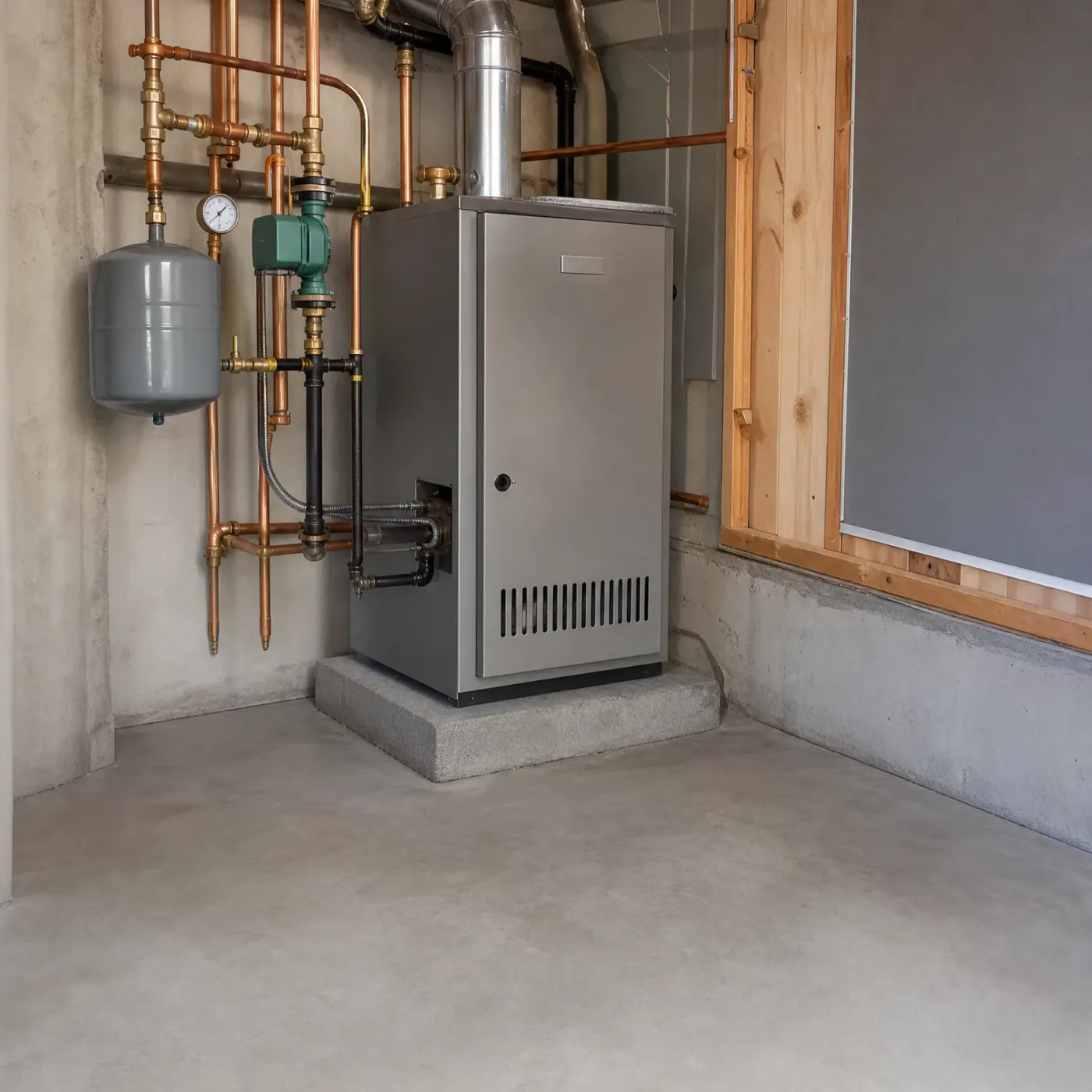
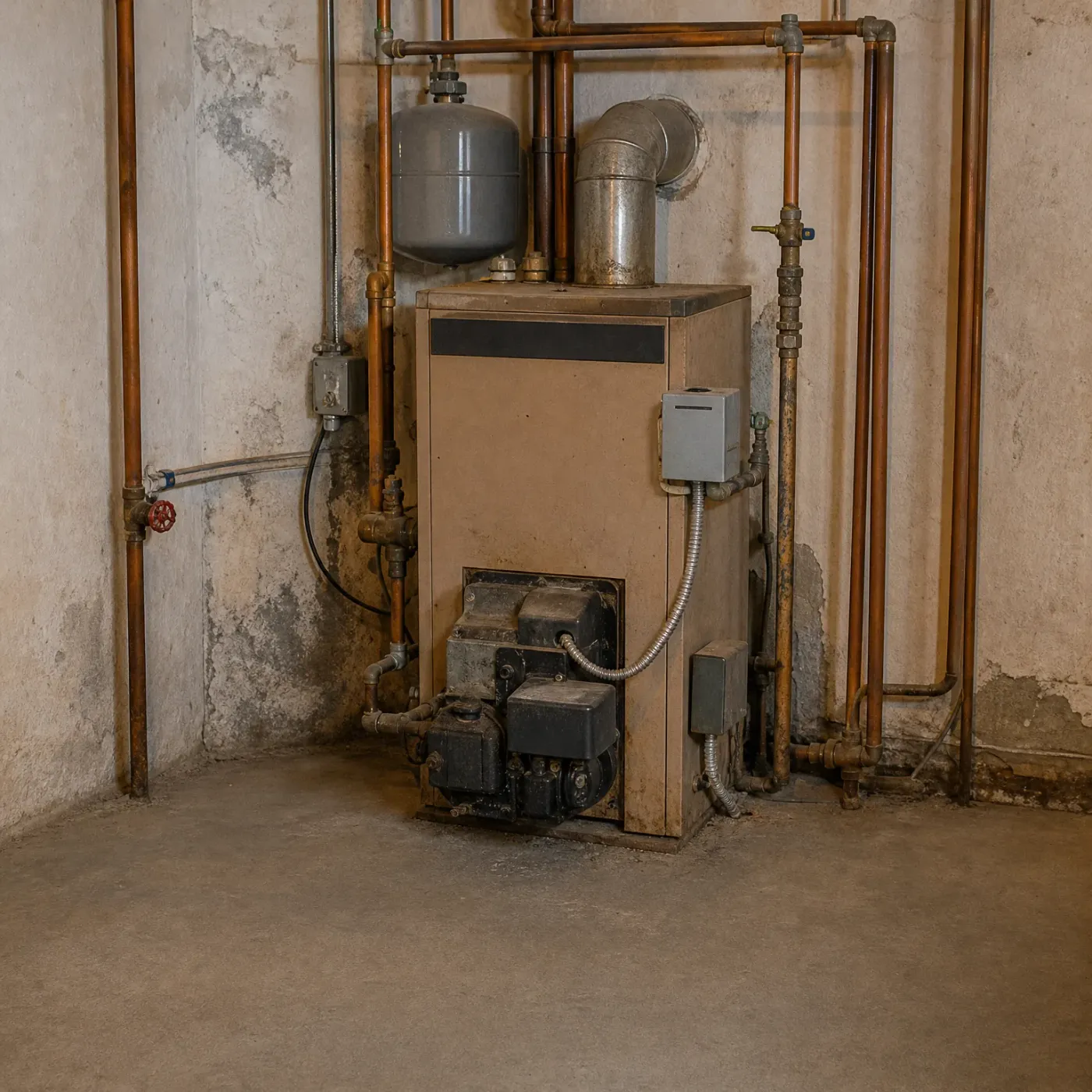
That gray unit on the pad, the copper piping, the pump, the gauge, all of it working the way it was built to. It heats the house fine. It just sends part of every gas dollar out that stainless flue pipe instead of into your rooms.
An old boiler past its prime
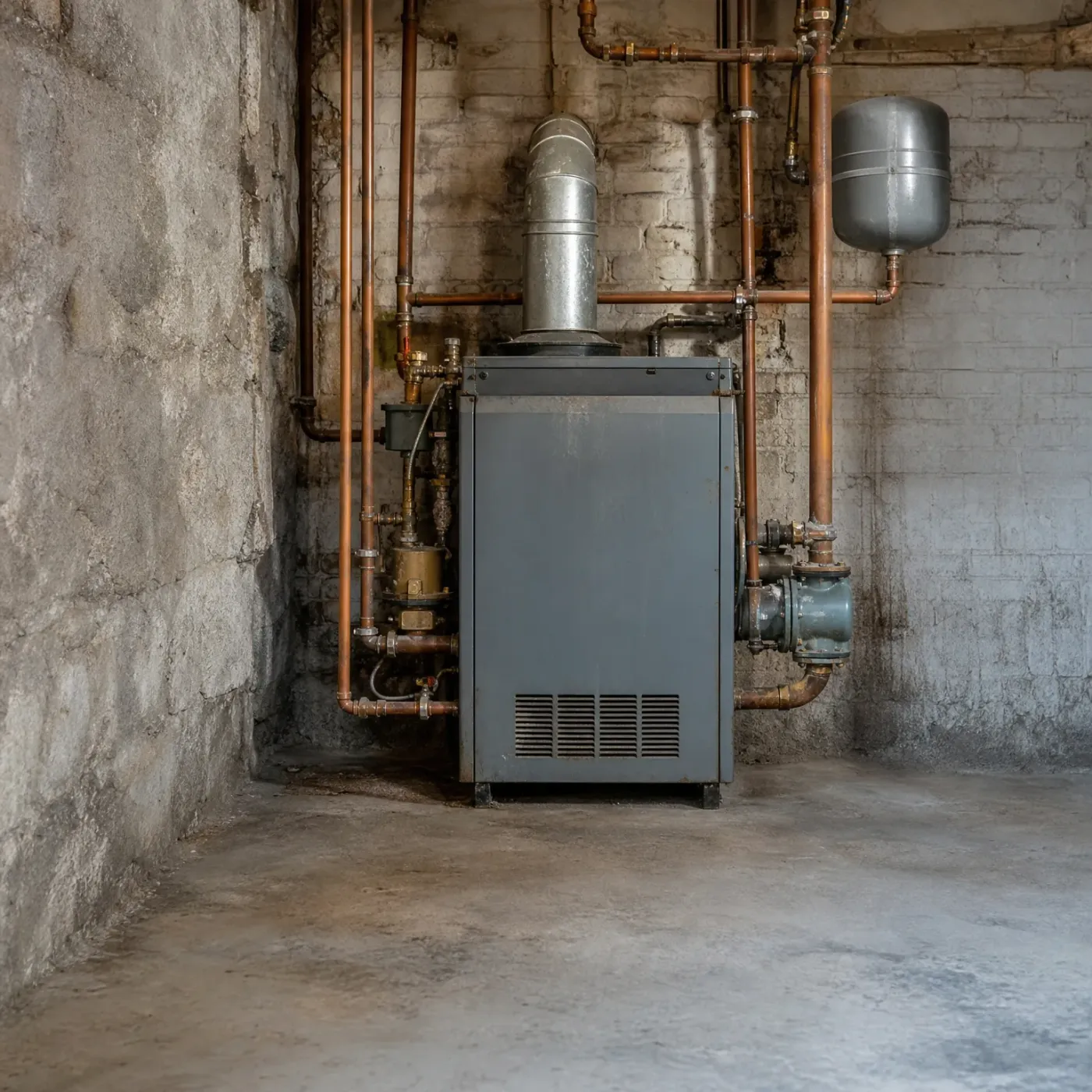
That oil-fired unit in the corner, with pipe running along every wall, is doing more work than a boiler this age should. The burner and pump are original equipment. Parts get harder to find, and the gas it burns buys you less heat each winter.
Winter nights average 19°F statewide
At 19°F, your boiler is firing most of the night to hold a comfortable temperature, not cycling on and off a few times. That steady run is exactly where a condensing boiler's second heat exchanger earns its keep, pulling heat out of the exhaust that a standard boiler just sends up the flue.
NOAA nClimDiv 1991-2020 county normals weighted by homes
Venting that proves the point
A standard boiler needs a wide metal flue running up through the roof, because the exhaust stays hot enough to rise on its own. A condensing boiler vents through PVC pipe out a side wall, since the exhaust has already given up most of its heat by the time it leaves. That difference in pipe tells you where the heat went. If your flue is a narrow plastic pipe through the wall instead of a chimney, the boiler on the other end of it is already condensing.
The flue gas temperature gap
A standard boiler sends exhaust out the flue at 350 to 400°F. A condensing boiler drops that same exhaust to around 100 to 120°F before it leaves the house. That gap is heat pulled back into your water instead of lost to the outdoors. It is also why the exhaust from a condensing boiler runs cool enough to leave through plastic pipe, and why you will see water dripping from that vent pipe on a cold day in Michigan.
A high-efficiency boiler earns its keep in a Michigan winter
A boiler that runs from October to April, through nights in the teens, is doing real work in this state. The math holds up here in a way it wouldn't somewhere mild, because a standard boiler loses the same 15 to 20 cents on the dollar whether it's firing for three months or seven. In Michigan it's firing for seven, so that loss adds up every single week of the cold season. A condensing boiler recovers most of that, and in a house heated by gas, the savings land on the bill that already stings the most.
If you've read this far, you already know where your boiler stands and whether it's worth replacing. The next step is getting someone out to look at your specific setup, your venting, your gas line, the space the new unit needs, and tell you what installation actually involves in your house. Send the form and that part stops being something you have to figure out alone. A contractor who installs these in Michigan homes will reach out and take it from there.
Boiler Installation
The right pro for this job
Step 1 of 3: Equipment
Say what's going on with your boiler, and a pro who works on them reaches out.
A local pro who knows boilers gets your details and gets in touch.
Send the form and the search for an installer is over.
Once you send the form, finding a pro is off your list.
Describe the project once instead of to every installer.
Skip collecting and comparing quotes for the new boiler.
One installer gets your project, so there's no bidding war over it.
Your request goes to one pro, not a list of companies.