Signs your boiler won't last a Michigan winter

Step 1 of 3: Equipment

What are the signs my boiler won't make it through a Michigan winter?

You caught a problem with your boiler now, before the cold really sets in, and you want to know if it's a quick fix or something that's going to leave you without heat in January. That's a fair question to ask before a Michigan winter, not after.

Short cycling, rust-colored water, or a pilot that won't stay lit mean it's time to get it checked

A boiler that turns on and off every few minutes, makes a banging or kettle sound, or leaks water around the base is telling you something is already failing inside it. Rusty water from the tap when the heat kicks on often means corrosion inside the tank itself, not just the pipes. A pilot light that keeps going out points to a bad thermocouple or a draft problem, either one worth catching now. None of these mean the boiler is finished, but they mean it's working harder than it should to keep your house warm. With gas heat common across Michigan and power here costing what it does, a boiler losing efficiency shows up fast on the bill, and a small problem left alone through a Michigan winter tends to turn into a cold house at the worst time.

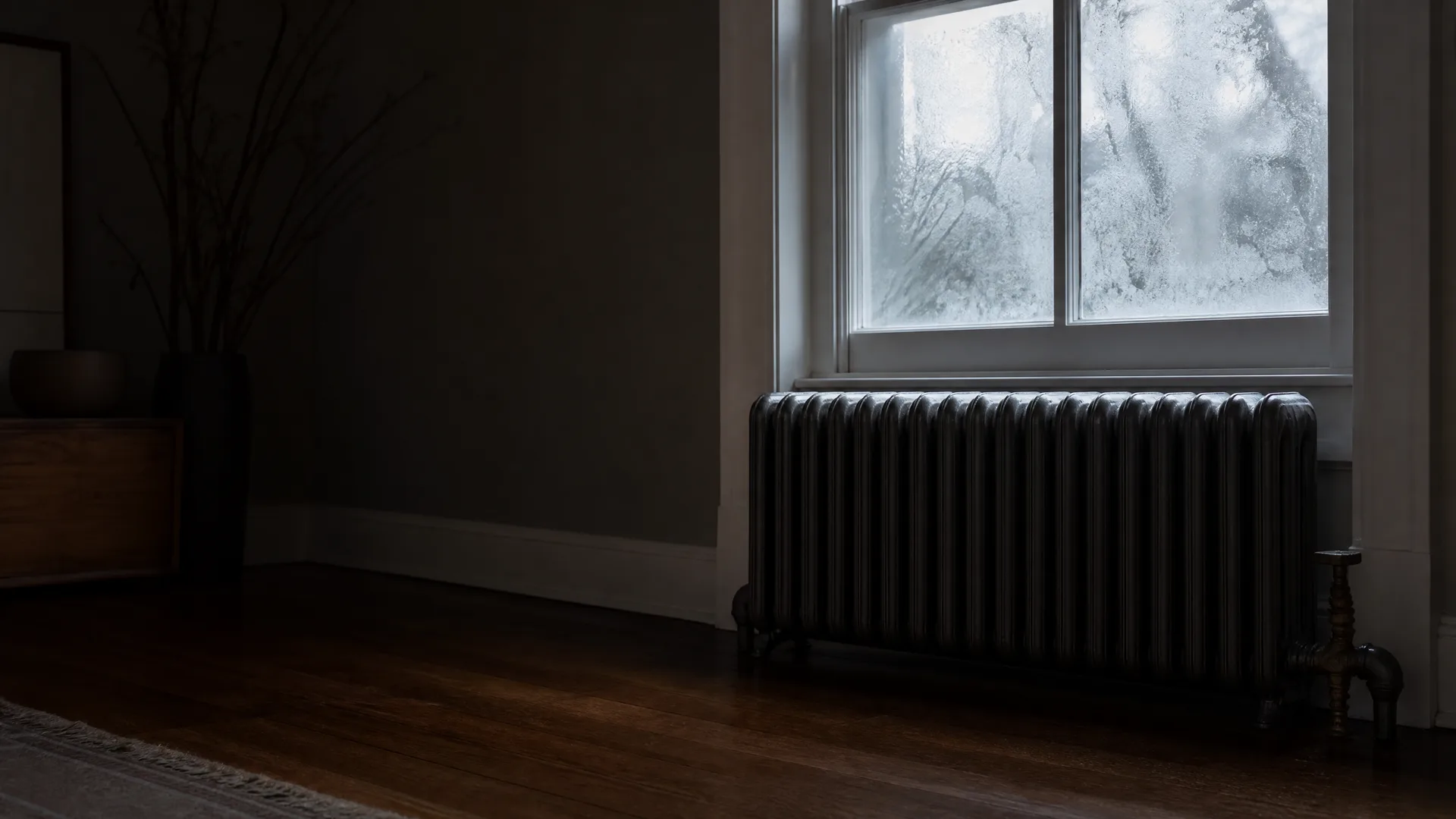
A cast-iron column radiator stands beneath a frosted window in a dim room with dark walls, a wood floor, and a vase of bare branches on a low cabinet at left.

You're up before the sun, and the living room is cold enough that you can see your breath near the window. The radiator under it ticks as it tries to heat up, but the glass above it has a layer of ice on the inside. Outside, the driveway lights are still on from the night before. You put a hand on the radiator. Warm at the bottom, cool at the top, the way it's been doing for a few weeks now. You've bled it twice already this month. The thermostat says 68. The room doesn't feel like it. You pull your robe tighter and go check the thermostat in the hallway, wondering if it's the same story there too.

Call Now or Watch and Wait

Call now

  • Short cycling, where the boiler fires, shuts off, and fires again within a few minutes, usually means a part is failing, not just that it needs a tune-up.
  • Water pooling at the base of the boiler or around pipe joints means a seal or fitting has already given way, and it won't seal itself back up.
  • A kettling or banging sound from the heat exchanger means sediment has built up inside it, and that part runs hotter than it should every time it fires.
  • If the pilot or igniter won't hold and you're relighting it yourself more than once a week, that's a sign the gas valve or igniter is on its way out.
  • Rooms that used to heat evenly and now don't, with no change to your thermostat or vents, points to a circulator pump that's lost strength.

Keep an eye on it

  • A pilot light that's gone from blue to yellow can mean a ventilation issue, and it's worth a look even if the boiler is still heating the house fine.
  • Rust starting on the outside of the tank or pipes is worth tracking, since it tells you where water has been getting out slowly.
  • If your boiler is louder than it used to be but still holds a steady flame and heats on schedule, that's worth mentioning at your next service call.
  • A pressure gauge that drifts low between fill-ups, but comes back up fine when you add water, points to a small leak rather than a failing boiler.
  • Higher gas bills than last winter, with the house holding the same temperature, usually means efficiency is slipping, which is worth checking before the coldest months.
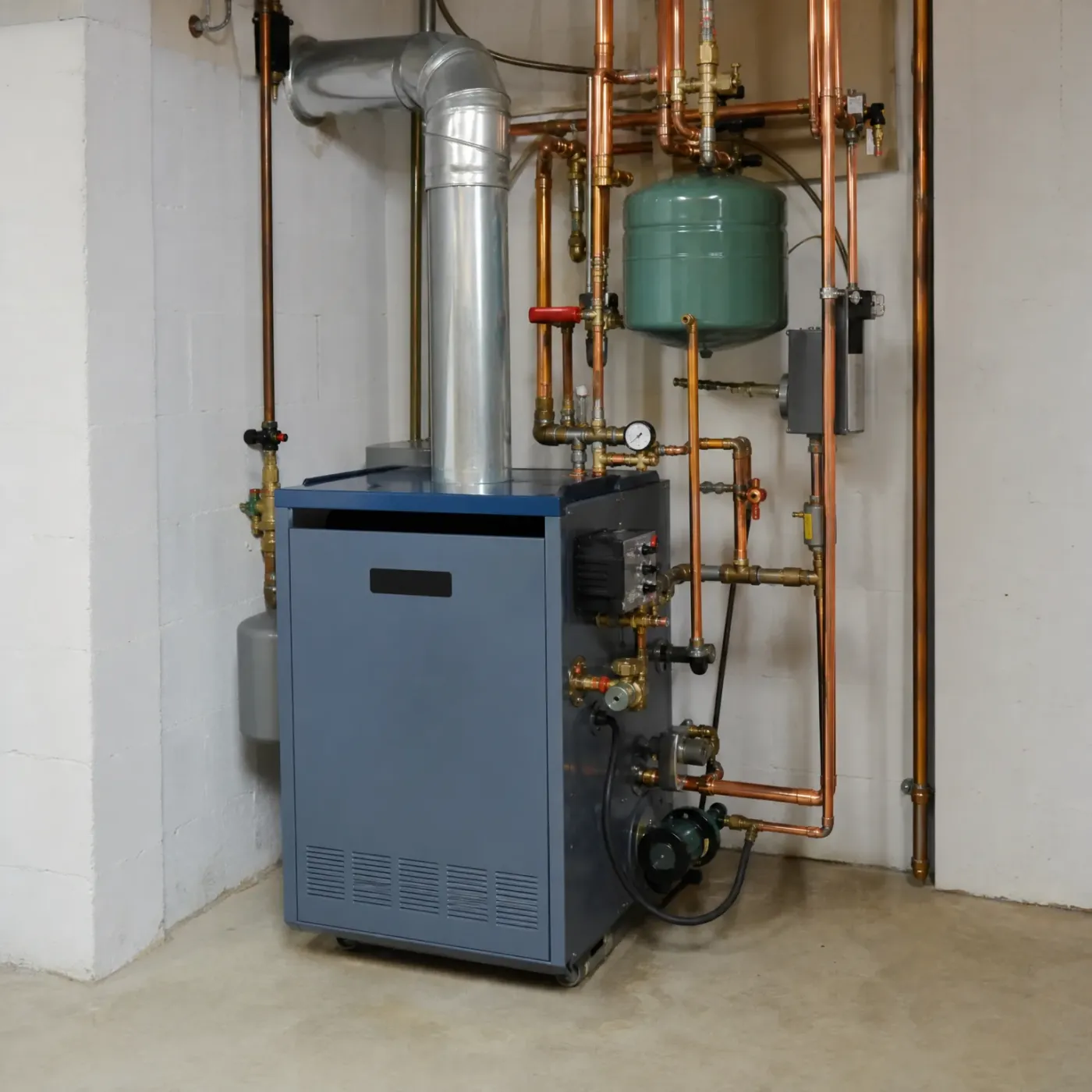
A blue-gray residential boiler in a basement corner, connected to copper piping, a green expansion tank, a circulator pump, gauges, and a metal flue pipe against painted block walls.

Running the way it should

Steady pressure on the gauge, pipes dry at every joint, and the flue drawing clean. A boiler in this shape can handle a stretch of single digit nights without drama. Small problems still get checked before they become big ones.

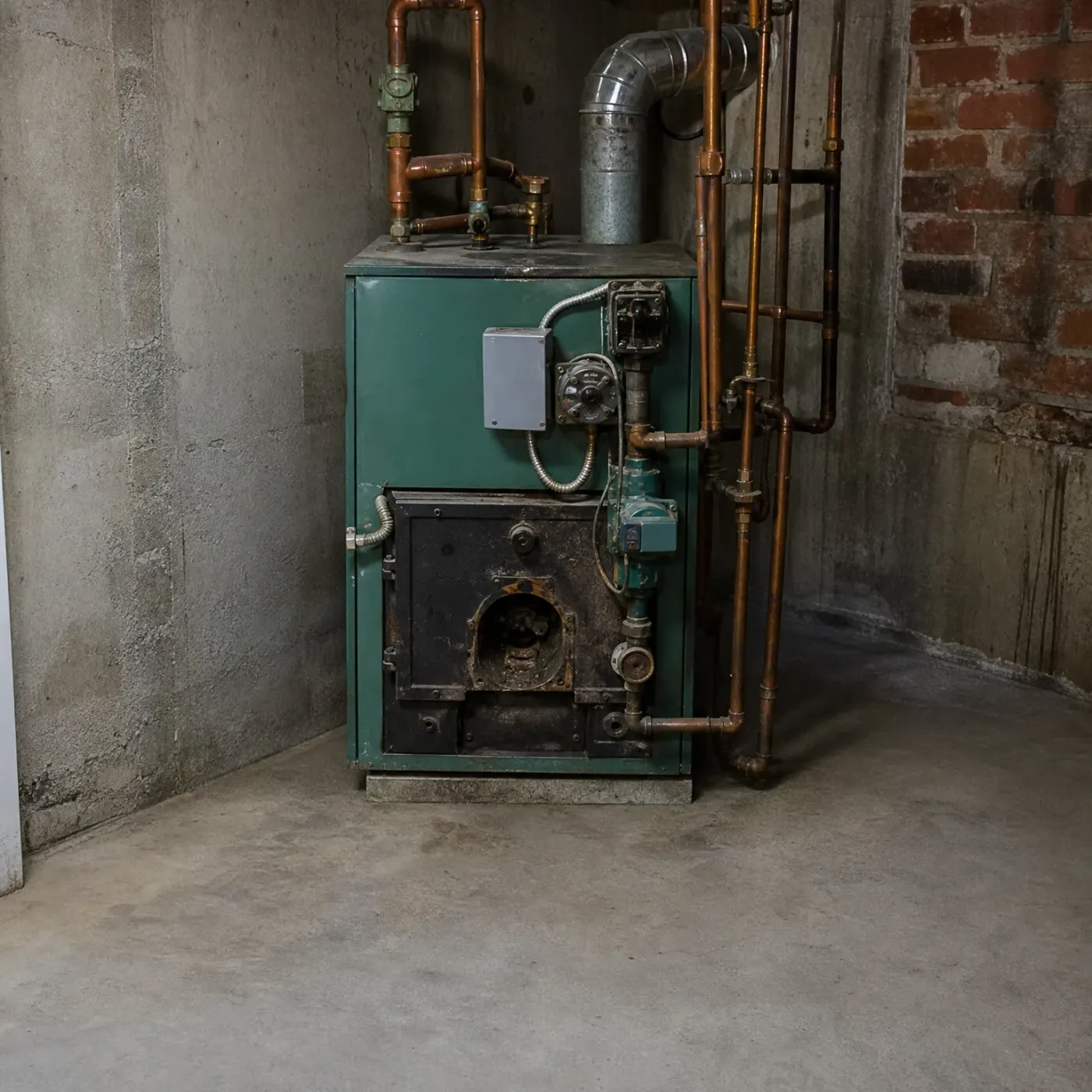
A green cast-iron boiler with a soot-stained front door, copper piping and a metal flue, standing on a concrete floor in a basement corner with concrete and brick walls.

Past the point of patching

A corroded firebox like this one isn't a part you swap and move on from. Rust through metal that thin means combustion gases aren't staying where they belong. That's a boiler to replace, not repair, before the first hard freeze.

A closed silver laptop and a ceramic mug of dark coffee sit on a wooden table in front of two chair backs, with a kitchen counter, tiled backsplash, wooden cutting boards, a vase of greenery and a potted plant by a window behind.

How a failing boiler actually gives out

A boiler doesn't quit the way a light bulb does, all at once. It fails one part at a time, and each part failing puts more load on the ones still working. A thermocouple or flame sensor that's gone bad will make the burner shut off early, so the boiler short cycles trying to satisfy the thermostat. That cycling wears the ignition system faster than steady running would. A circulator pump losing strength moves less hot water through the loop, so the boiler fires longer and more often to reach the same setpoint, and that extra runtime wears the heat exchanger. By the time you notice a cold room or a banging pipe, something upstream of that has usually already been struggling for a while.

That's the part most homeowners can't see from the outside, which is why catching it early means finding someone who can actually look at the burner, the pump, and the pressure, not just the symptom you called about. Instead of searching contractor listings, calling a few, explaining the same noise or leak three separate times, and sitting with quotes that don't line up, you send one form. Finding someone who can get eyes on it becomes someone else's job instead of yours.

A gray upholstered sofa with a matching cushion sits beside a potted plant and a wooden table holding a small green plant in a stone pot, near a curtained window.
A smiling man in a navy long-sleeve shirt sits at a wooden table in a kitchen and dining area, with a ceramic mug, a potted plant, and a sliding glass door behind him.
A smiling bearded man in a green henley shirt stands at a kitchen island with a gray mug, looking off to the side, with a dining area and shelves blurred behind him.
A smiling bearded man in a navy sweater sits at a white kitchen island with a ceramic mug, with open shelves, potted plants and a range hood behind him.
A smiling man in a dark olive long-sleeve shirt sits in a kitchen beside a counter with a dark mug, with a dining table, sideboard and hallway visible in the blurred background.

What are you noticing around the house right now

You might hear the boiler kick on more than it used to, running longer to get the same rooms warm. A radiator that used to heat evenly now has a cold spot at the top, or it clangs and knocks when the water moves through it. Maybe the pilot light looks yellow instead of blue, or you've caught a faint metallic smell near the unit. The pressure gauge might be creeping below where it usually sits, so you top it off more often than you remember doing last winter. On its own, any one of these could be nothing. Together, or ignored through a stretch of single digit nights, they add up to a boiler that's working harder to do less, and a heating bill that's climbing while your house stays cooler than it should.

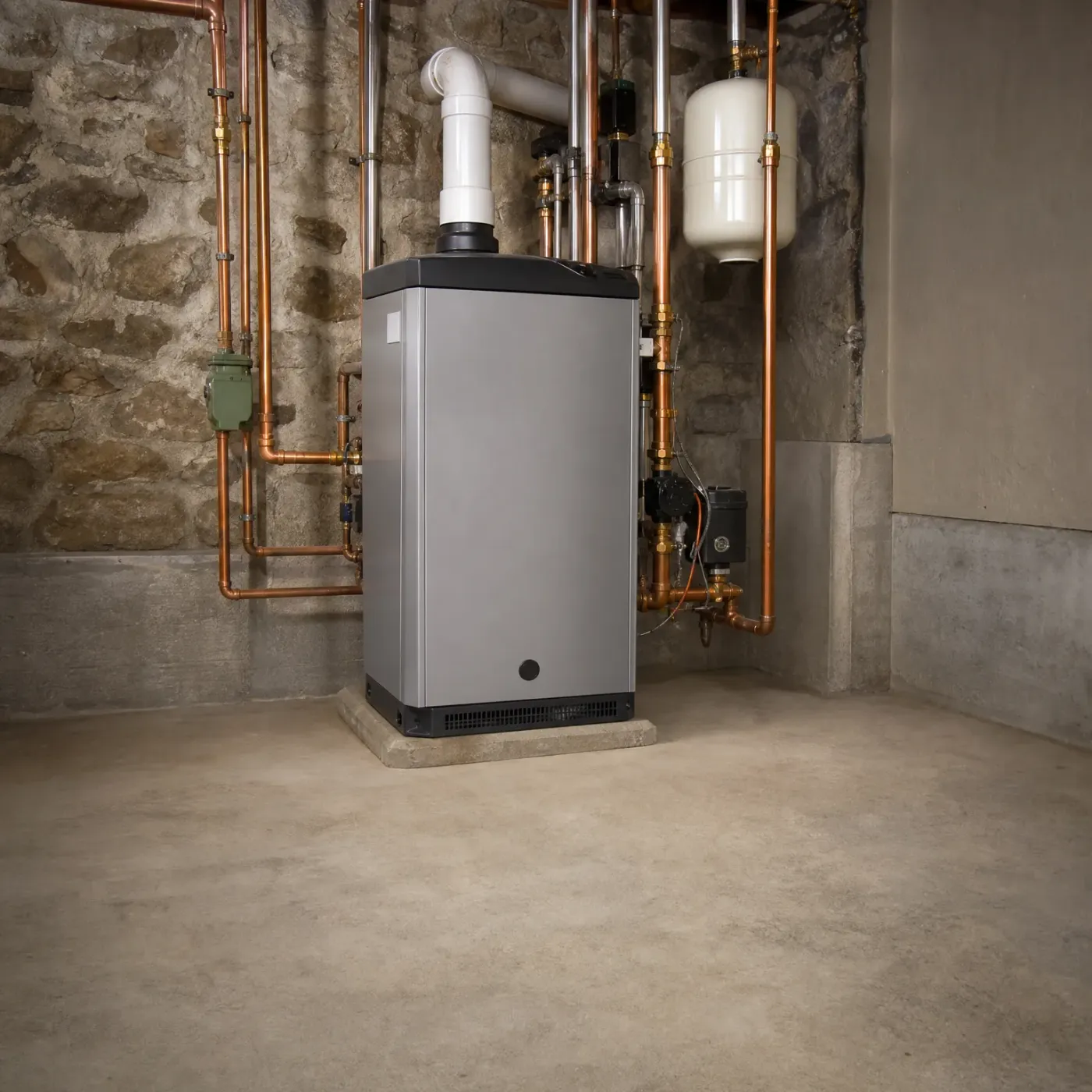
A gray floor-standing boiler on a concrete pad in a basement, connected to copper pipes, a white expansion tank, and a white PVC vent against a stone and concrete wall.
Pressure holds steady, the pipes and fittings stay dry, and the flue vents clean, copper and brass still bright under the stone walls.
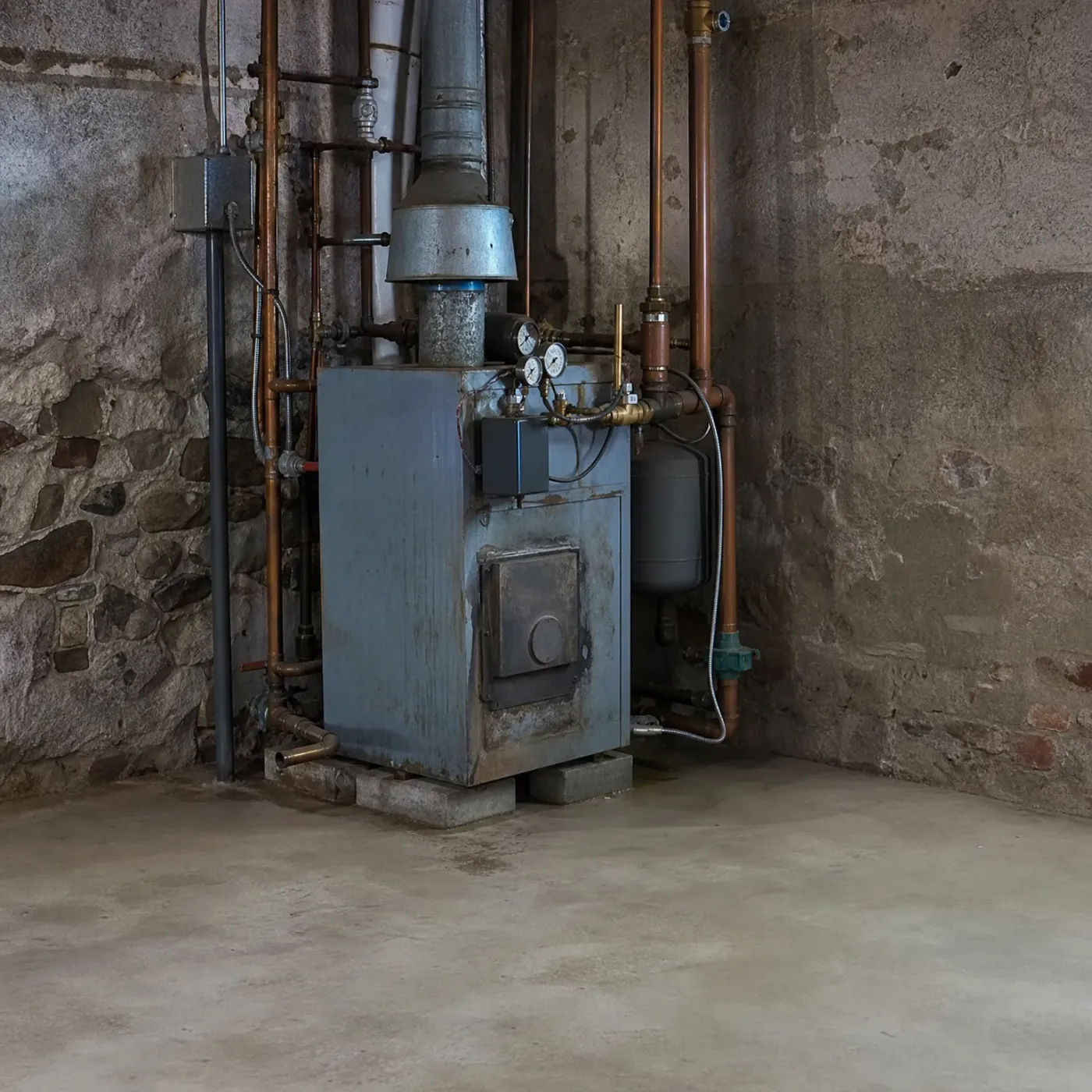
An older gray boiler with a metal flue, copper piping, pressure gauges and an expansion tank sits on concrete blocks in a basement corner with stone and concrete walls.
Cast iron this old runs on a bigger flue and worn fittings, and a crack in that iron means replacing the whole boiler, not a part of it.
A man in a blue T-shirt sits on a light gray sofa, laughing while looking at an open laptop in the foreground, with a framed picture, lamp and potted plant behind him.
A bearded man in a blue and brown plaid flannel shirt stands indoors looking out a window at snow-covered trees, with a ceramic mug on the windowsill.

It's off your list after this

Describe what your boiler is doing once, in one form.

Asking costs nothing, and the choice to hire stays yours.

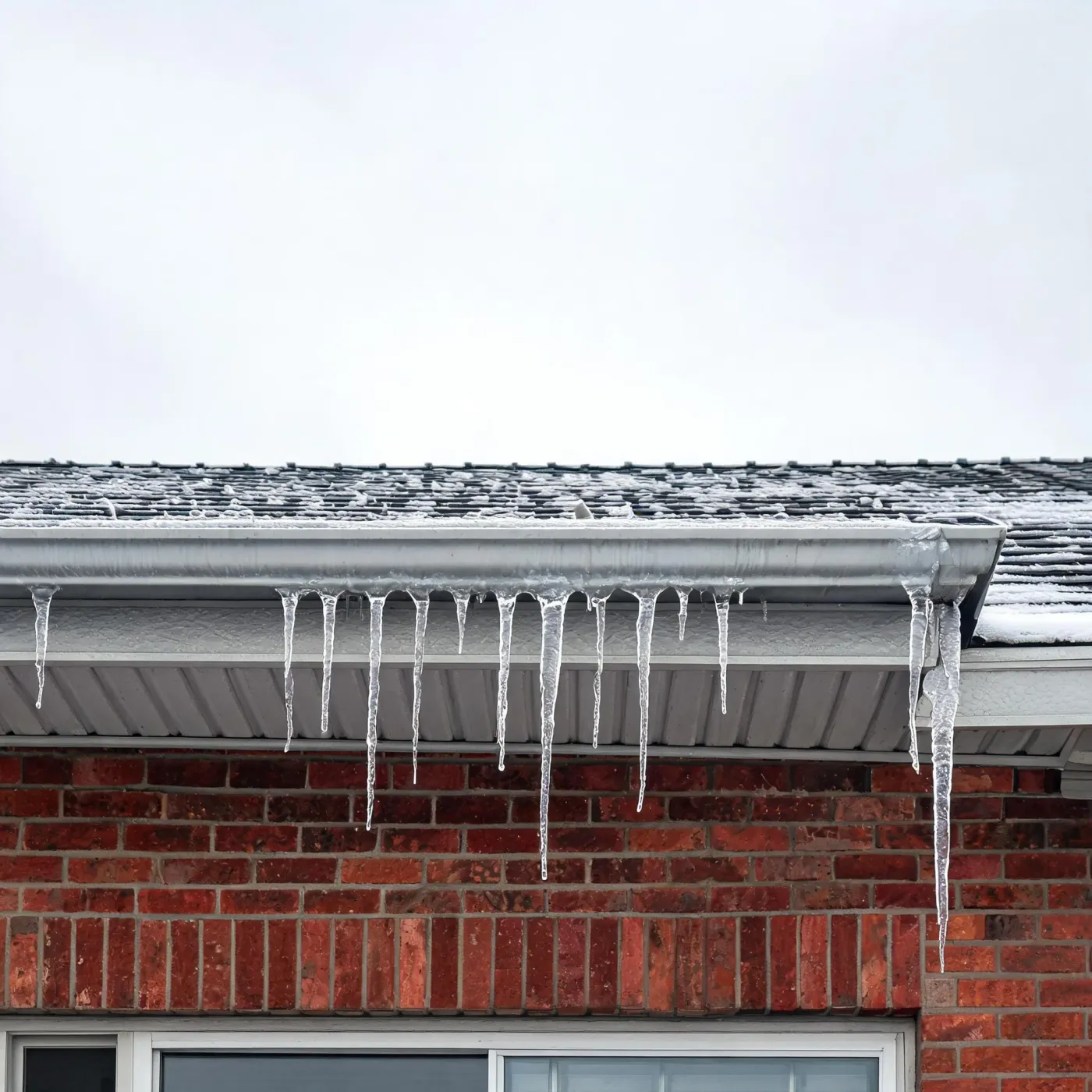
Icicles hang from a metal gutter along the eave of a red brick house with a snow-dusted shingle roof under an overcast white sky.

Winter nights average 19°F statewide, according to NOAA climate data. At that temperature your boiler is running long cycles most of the night just to hold a room at 68. A unit with a worn seal or a weak pump has no easy stretch to recover in. If it's going to fail, cold nights like these are when it shows, not during a mild October evening. Keep an eye on how long it takes to bring the radiators back up to temperature after it cycles off. If that time is stretching out week to week, the boiler is losing ground against the cold, not just working through a rough patch.

NOAA nClimDiv 1991-2020 county normals weighted by homes

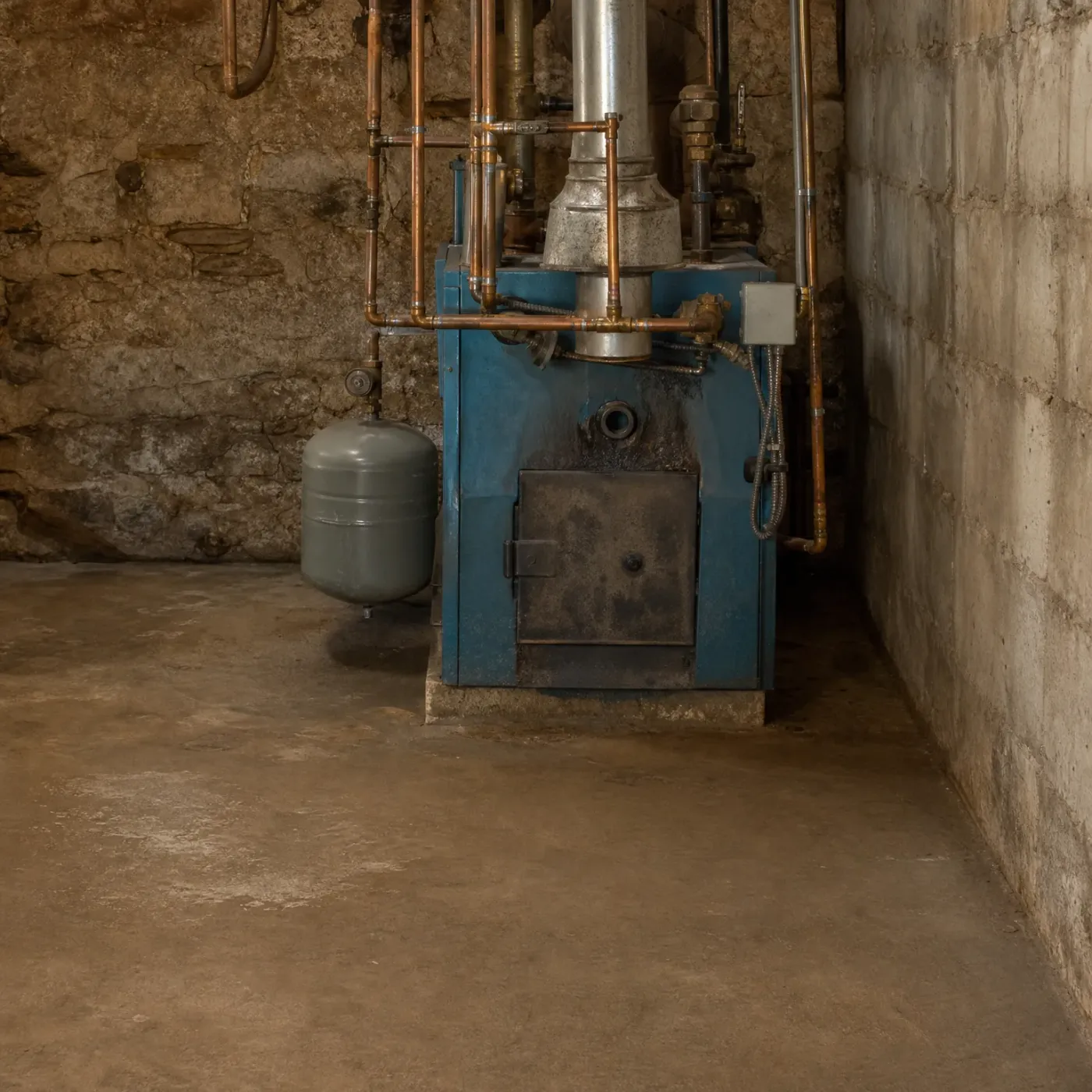
A blue cast-iron boiler with a metal flue pipe and copper piping stands against a stone and concrete block basement wall beside a gray expansion tank on a bare concrete floor.
Before you get your boiler repair
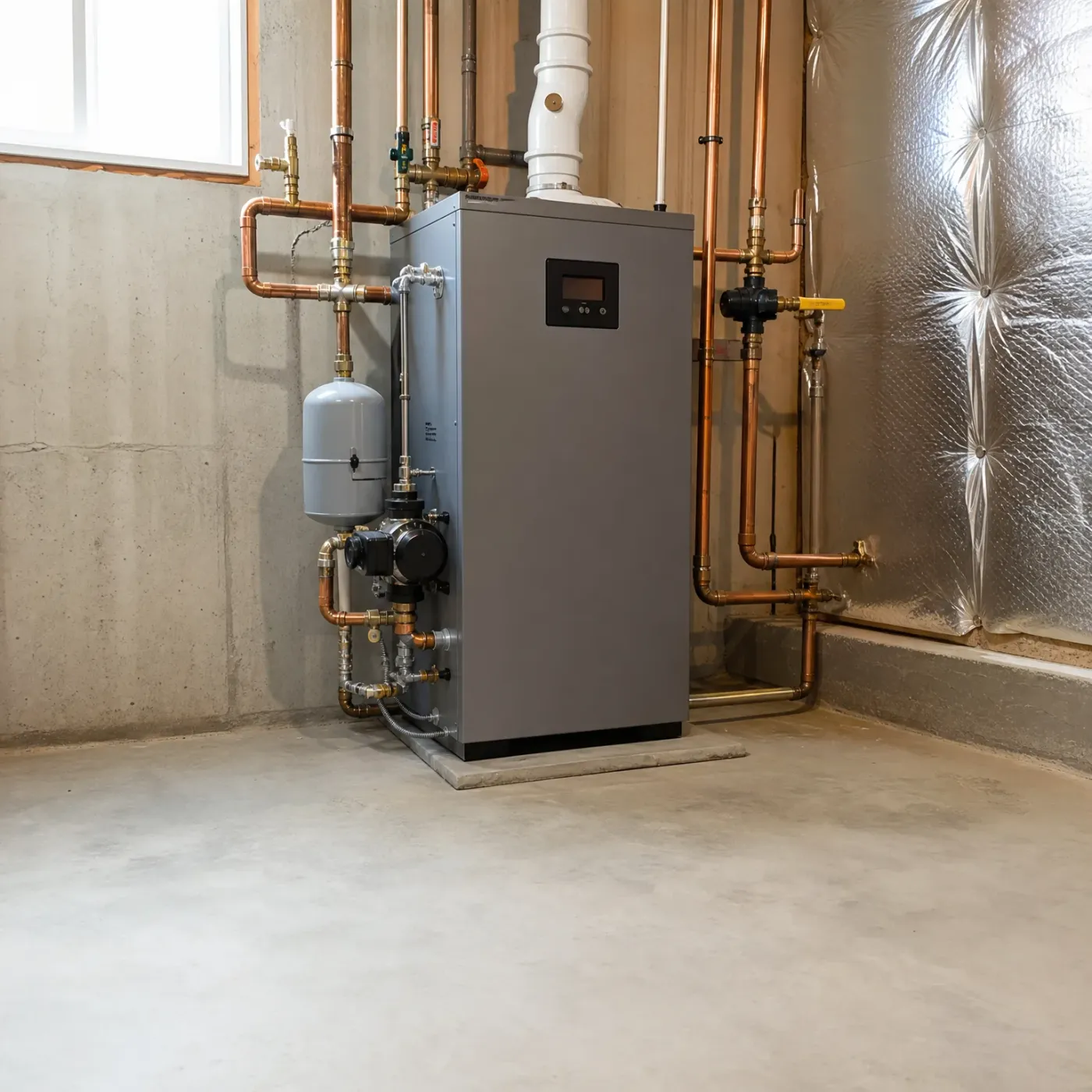
A gray boiler unit with a digital display stands on a concrete basement floor, connected to copper piping, a gas valve, a circulator pump and an expansion tank, beside a concrete wall and foil-faced insulation.
After you get your boiler repair

What age does to cast iron

A cast iron boiler can run thirty years or more, but the iron gets more brittle every winter it's heated and cooled. The stress is worst at the welds and at the joints where pipes connect. Once a hairline crack opens in a section, it doesn't seal itself. It carries water out, drips onto the burner below, and either the pilot won't stay lit or the section has to be replaced. On an older unit, finding one replacement section is harder than on something installed in the last few years.

What a clean burn looks like

A gas flame on a working boiler burns blue, steady, and mostly quiet. Yellow tips or a flame that lifts off the burner means it isn't getting the air it needs, and that same fire is putting soot into the heat exchanger instead of into your rooms. Soot buildup cuts how much heat actually transfers to the water, so the boiler runs longer to do the same job. Over a Michigan winter, that's more hours of run time on parts already working harder than they were built for.

Winter nights average 19°F statewide

Nineteen degrees is a typical overnight low here, not a cold snap. Your boiler has to hold the house through hours of that, night after night, all winter. If it's already short cycling or losing pressure, those long runs are what push a small problem into a breakdown.

NOAA nClimDiv 1991-2020 county normals weighted by homes

Where your boiler stands now

  • Short cycling, pressure that won't hold, and a flue that isn't drawing clean are the three signs that mean more than a tune-up.
  • A boiler showing one of these signs now is telling you where it stands before the nineteen degree nights test it.
  • Cast iron that cracks at a weld or joint can't be patched, and that failure usually shows up as a slow pressure drop first.
  • A radiator with a cold top or a boiler that runs longer than it used to is already losing ground against the cold.
  • None of these signs mean the boiler is done, but each one left alone gets worse the longer the cold runs.

A boiler that's short cycling, losing pressure, or venting a flue that isn't drawing clean has told you what it needs before the hard cold even gets here. None of that means it's finished. It means something specific is wearing out, and the sooner it's looked at, the less a January night can do to it. Cast iron that's cracked at a weld won't take a patch, and that kind of failure tends to announce itself quietly first, as a pressure gauge that won't hold where you left it. A radiator with a cold spot at the top or a boiler running longer than it used to is already working harder for the same heat, and that gap widens every week you wait. The point of catching any of this now is that a problem caught in November is a repair. The same problem ignored until a nineteen degree night is a house with no heat and a family finding a contractor at ten at night. Right now you have the time to get someone out to look at it, get a straight answer on what's wearing out, and get it handled before the cold is actually testing the boiler instead of just running it. That's the difference between dealing with this on your schedule and dealing with it on the boiler's. The signs above are your boiler's way of telling you which one this is going to be.

A dark wood cabinet with a paneled door and a ceramic pot of green foliage on top stands in a beige-walled room with white baseboard, a window at left, hardwood floor, and a patterned area rug.
A dark wood glass-front cabinet holding folded towels, woven baskets and a ceramic vase stands in a bathroom corner beside a window, with a potted fern and stacked towels on top and a freestanding tub partly visible at left.
A woven basket holding a green cushion and a cream fringed knit throw sits on a wood floor in a room corner beside a window and a dark wooden cabinet.
Corner of a room with a dark wood cabinet topped by a round vase, a linen curtain at a window, white baseboard, oak plank flooring with sunlight patches, and a woven jute rug in the foreground.
A dark wood sideboard against a pale wall holds a shallow stone bowl and a round ceramic vase with leafy branches, with sunlight from a curtained window falling across the wall, wood floor and woven rug.

Hand off the search today

Answer a few questions instead of calling shop after shop.

Send it today

No fee to send it, and nothing to sign.