
Why one radiator stays cold in a Michigan winter

Send the request today and stop worrying about who to call.

Hand it off

Why is one radiator in my house cold when the rest are hot?

You keep the heat even through the house, and one cold radiator in January, with everyone else close by relying on it, is the kind of thing you notice fast. The rest of the system is doing its job, which makes the one cold spot stand out more, not less. You want to know if this is something simple or a sign the boiler itself is struggling.

Air trapped in that radiator is blocking the hot water

A boiler pushes hot water through pipes to every radiator in the house. If air gets into that line instead, it collects at the top of the radiator and keeps the water from filling it, so the bottom may be warm while the top stays cold, or the whole thing stays cold while the rest of the house heats fine. It can also be a closed valve, or sludge built up low in that one radiator over the years. None of this means the boiler is failing. It usually means that one radiator, and the piping that feeds it, needs attention a plumber can give it directly rather than something wrong with the system as a whole.

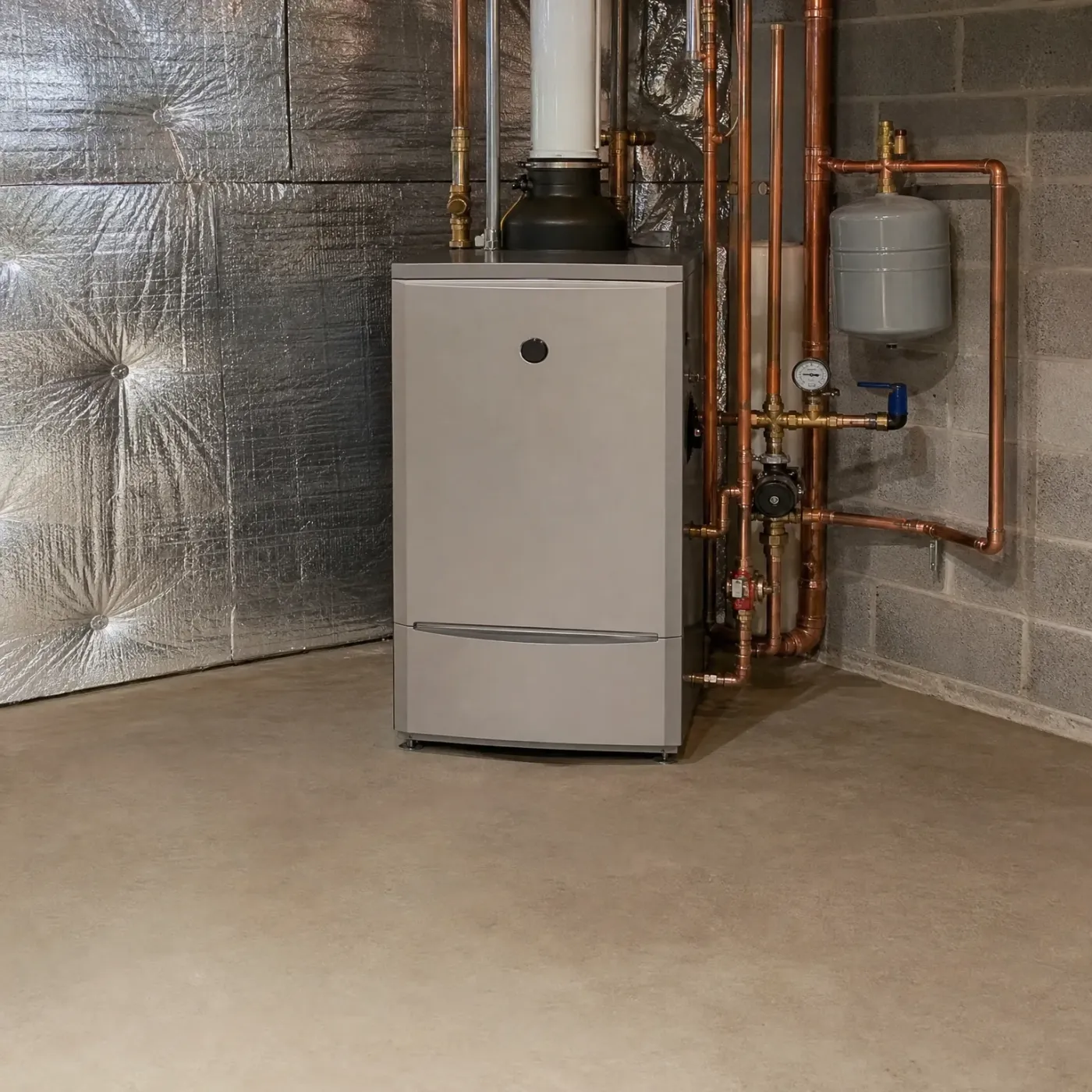
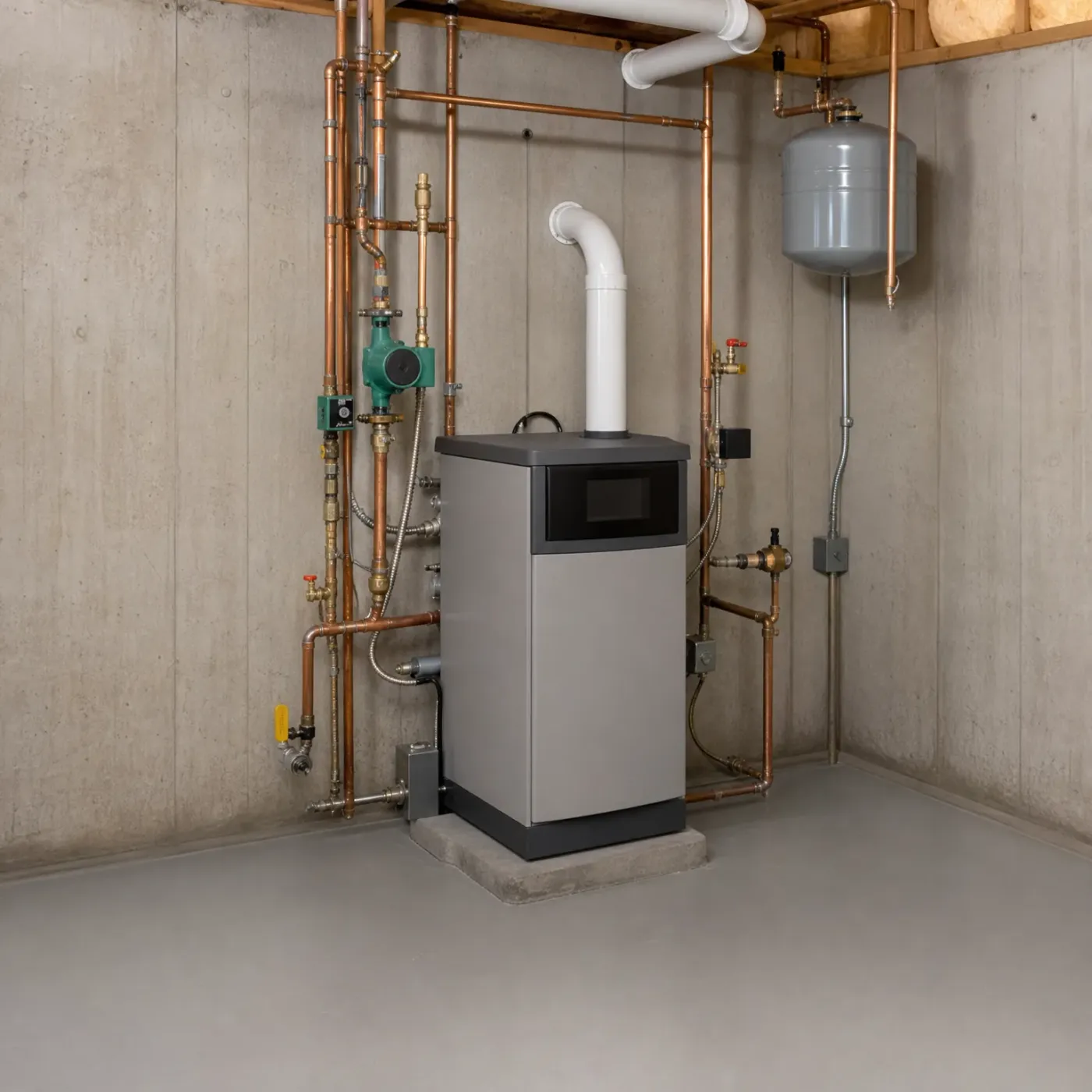
A gray floor-standing boiler on a concrete pad in a basement corner, with copper piping, a circulator pump, a white PVC flue, and a gray expansion tank mounted on the wall.

Boiler Running Right

Pressure holds steady, the pump runs quiet, and every radiator in the house gets hot within a few minutes of the burner firing. Water moves through the loop without air pockets slowing it down. When the system looks like this, a cold radiator usually comes down to that one zone, not the boiler itself.
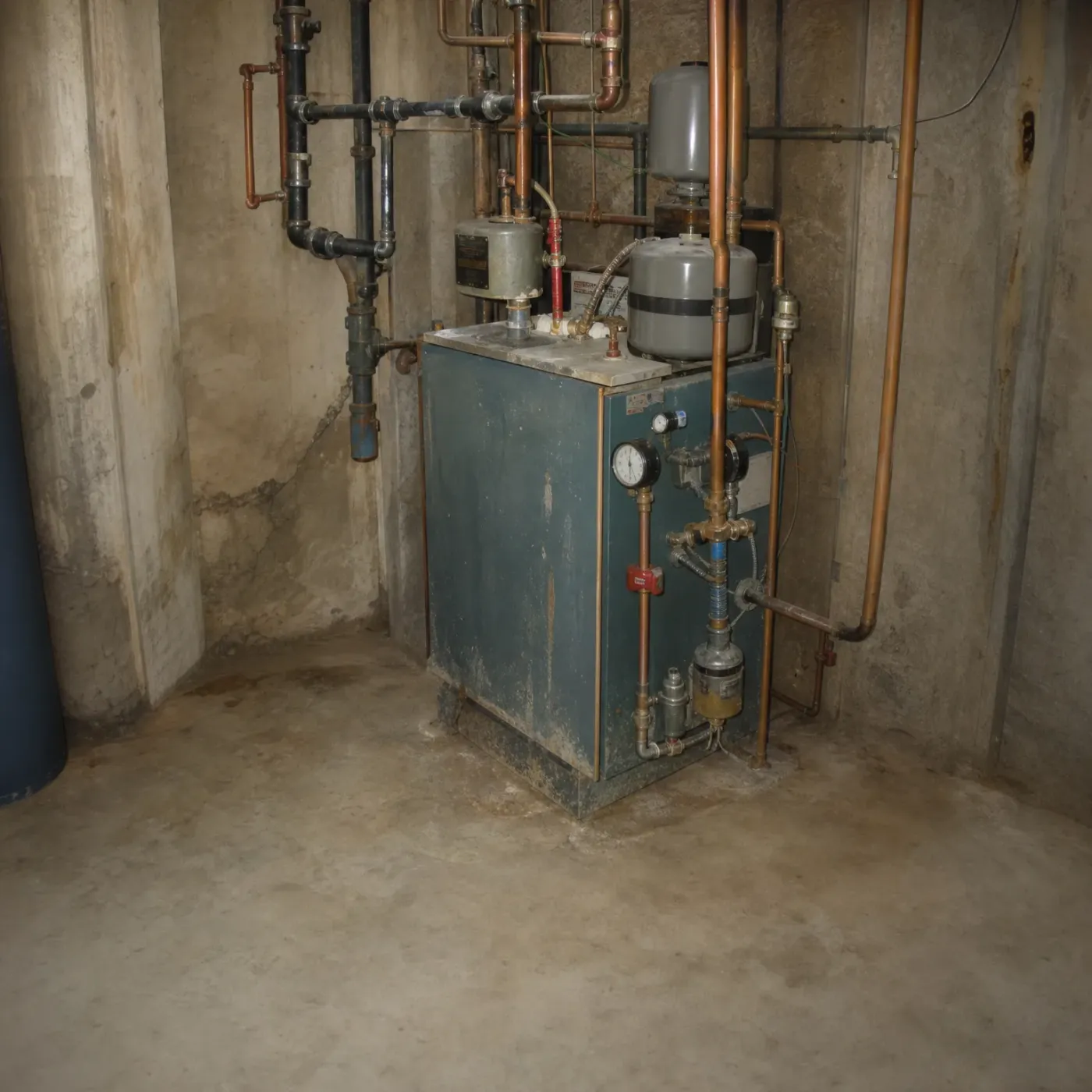

A green metal boiler with pressure gauge stands in a concrete basement corner, surrounded by copper and black iron pipes and two tank-shaped vessels.

Boiler In Trouble

An older cast-iron boiler like this can still heat a Michigan house fine, but worn valves, a failing pump, or a pressure gauge sitting low point to problems that spread past one radiator. If the whole system runs weak, not just one room, the boiler itself is worth a look before winter gets any colder.

A woman in a knitted shawl sits in a living room with a fireplace, shelves, a sofa with cushions, and a lamp by a bright window, looking off to the side.
A woman with long brown wavy hair in a green shirt over a white top stands in a living room with built-in white shelves, a ceiling fan, a potted plant and a sliding glass door.
A woman with shoulder-length gray-streaked hair in a light gray knit sweater stands smiling and looking off to the side in a living room with a sofa, houseplant, framed picture, and sunlit sliding glass door.
A woman with shoulder-length curly gray hair wearing a gray knit sweater stands near a window with a sheer curtain, looking to the side, with a blurred interior room behind her.

Trapped Air Blocks the Water

A radiator heats by filling with hot water, and air in the line keeps that water out. Air rises to the highest point it can reach, which is usually the radiator furthest from the boiler or on the top floor. That pocket sits there and blocks the water behind it. Bleeding the valve lets the air out and water takes its place, but if the same radiator keeps trapping air after it's been bled, something upstream is letting air into the system instead of keeping it out, and that part needs a look.

A Closed or Stuck Valve

Every radiator has a valve at one end that controls how much water gets in. If that valve is shut, or stuck partway closed from age or corrosion, water can't get through no matter how well the rest of the boiler is running. Some valves get bumped closed during cleaning or furniture moving and nobody notices until the cold snap hits. A valve that looks open can still be stuck inside, which is why the fix sometimes needs more than turning a handle by hand.

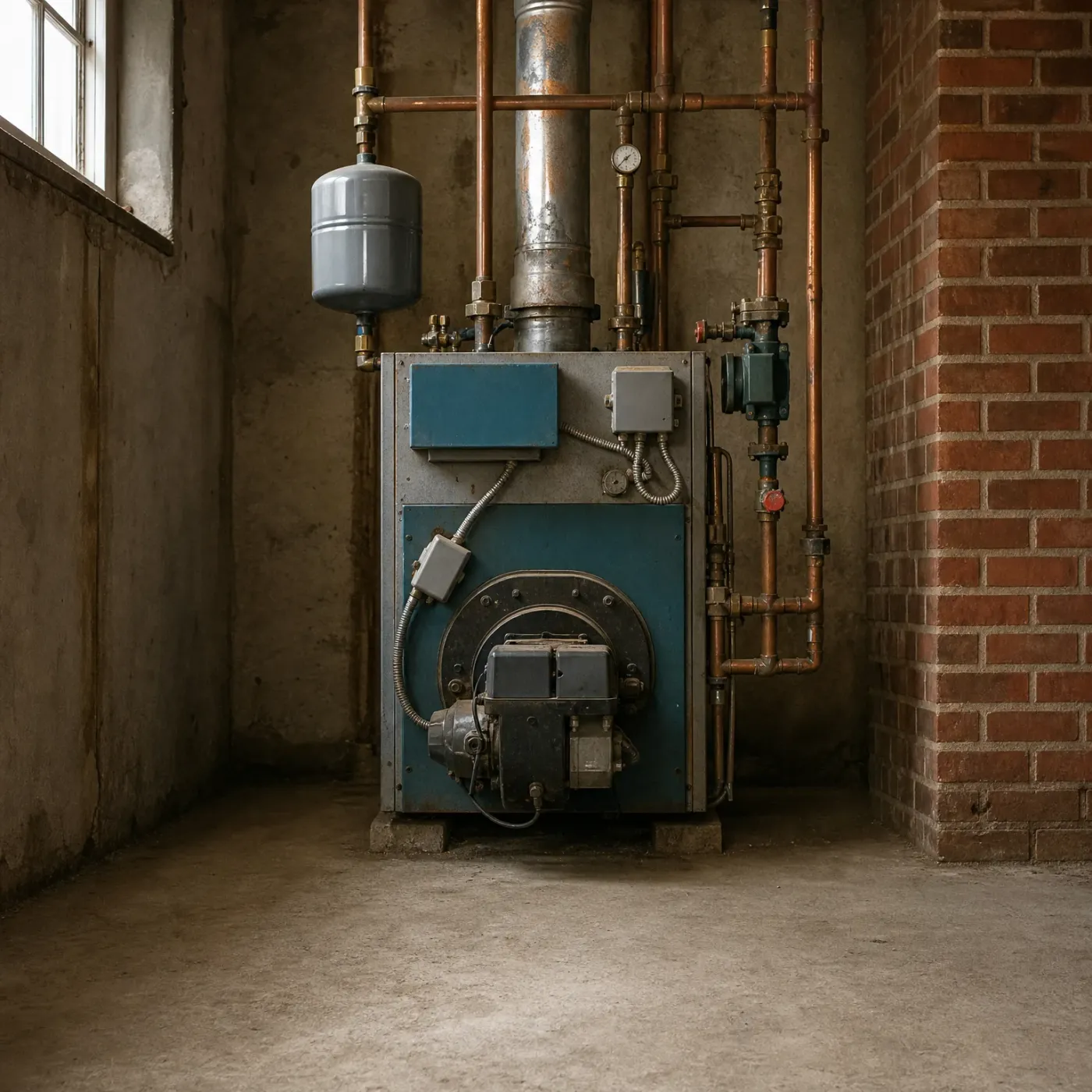
A blue cast-iron boiler with a burner unit, gauges and copper piping stands in a concrete-floored basement room beside a red brick pillar and a window.
Before you get your boiler repair
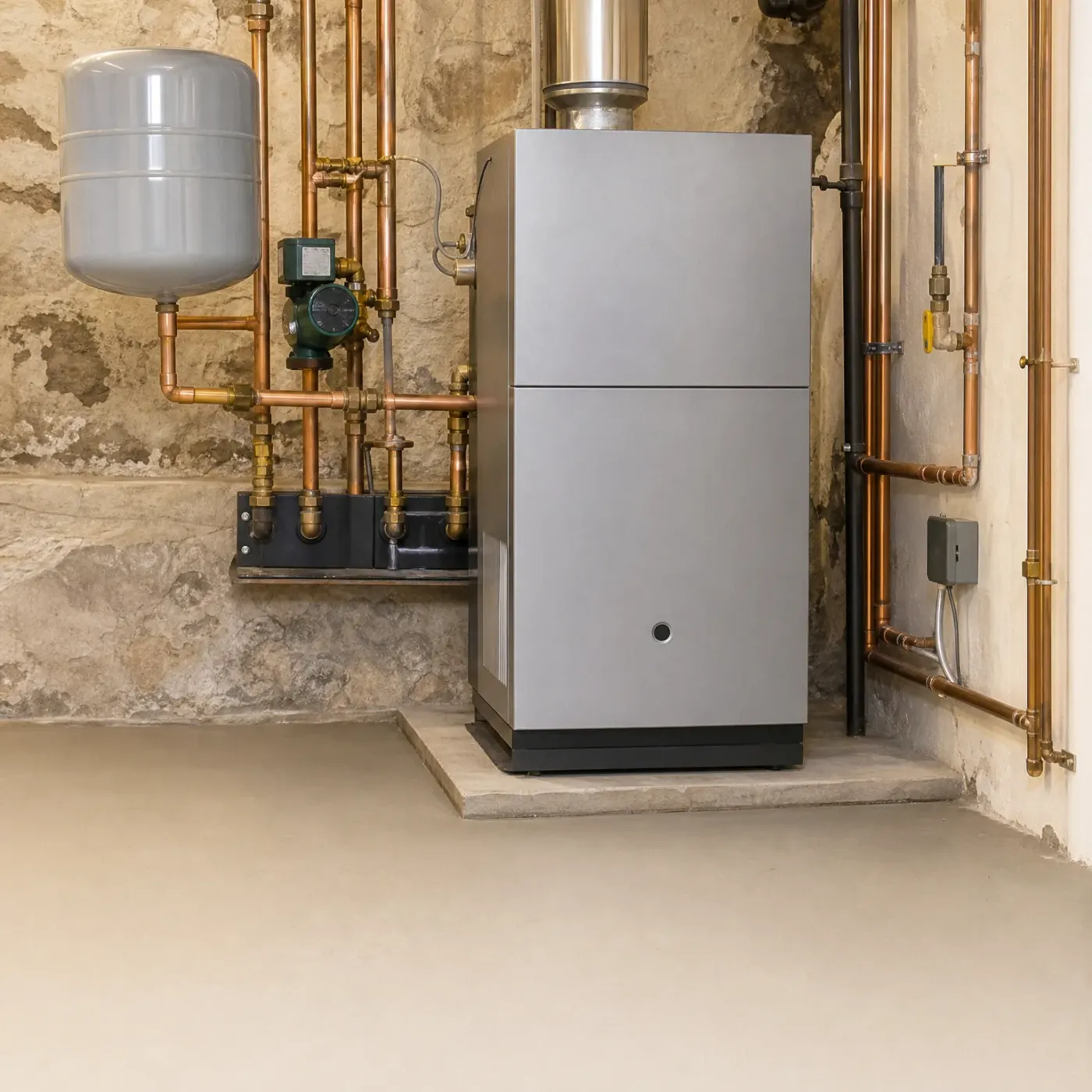
A gray boiler unit with a flue pipe stands on a concrete pad in a basement, surrounded by copper piping, a circulator pump, an expansion tank mounted on a stone wall, and an electrical outlet.
After you get your boiler repair

The Room That Never Warms Up

If that cold radiator sits in a bedroom, you already know the trouble. The thermostat somewhere else in the house reads warm enough, so the boiler doesn't fire again for a while, and that one room just sits cold overnight. You end up with a space heater running in the corner, or a kid who ends up on the couch instead of their own bed. It's not a small thing when it's the room someone sleeps in every night. The rest of the house being warm doesn't help the one that isn't, and in a Michigan January that gap is easy to feel.

What It Does to Your Gas Bill

A boiler that can't get water through every radiator usually runs longer to make up for the one that isn't pulling its weight. The thermostat is reading the rooms that do get hot, so it keeps calling for heat trying to even things out, and the burner cycles more than it should. Gas heats most homes in Michigan, so that shows up on the bill before it shows up anywhere else. Left alone, the strain also falls on the pump and the valves working harder than they need to, which is how a cold radiator turns into a bigger repair.

A woman and a child wrapped together in a knitted gray blanket on a couch, with the child's head resting on her shoulder and a lit table lamp and houseplant in the background.
An older woman with gray hair in a bun and glasses, wearing a beige knit sweater, smiles while looking to the side in a warmly lit kitchen, with a loaf of bread on the counter in the foreground and a snowy scene outside the window.
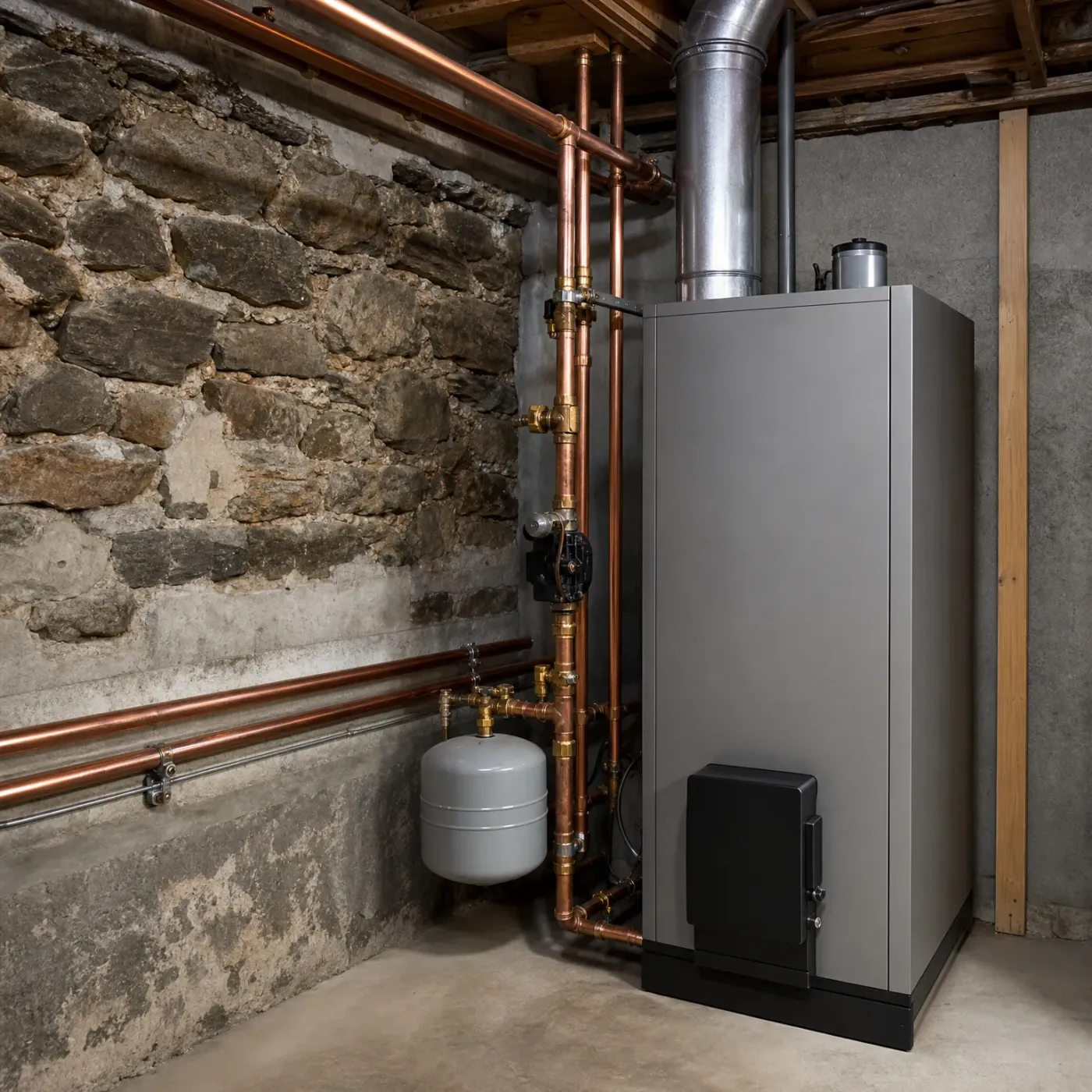
A gray boiler unit with a metal flue stands in a basement beside copper piping, valves and a small expansion tank, against a stone and concrete wall with wooden joists overhead.

Stop chasing a boiler pro

Your request goes to one pro, not a list of companies.

Send the request and finding a pro stops being your problem.

Find a licensed boiler pro

There's no charge for the request.

Bleed the Radiator or Call for Repair

Bleed It Yourself

  • A radiator key opens the bleed valve at the top end, and air hisses out until water starts to dribble, which usually takes less than a minute per radiator.
  • This only clears air that is already in the system, so if the room goes cold again in a week, something is still letting air in.
  • You can reach every radiator in the house in an afternoon, so you will know fast whether bleeding solved the one cold spot.
  • If the valve is seized or painted over, you will not get it open without stripping it, and then you have made the job bigger.
  • A low boiler pressure gauge means bleeding will just pull in more air behind what you let out, so the cold radiator comes back.

Call for Repair

  • A licensed local contractor who works on boilers all winter knows which radiators in a loop lose circulation first and checks those before guessing.
  • If the valve on that radiator is corroded shut or the balancing valve is stuck, a wrench and some patience fix what a bleed key cannot.
  • One contractor means one visit and one diagnosis, not three different guesses about why that radiator alone runs cold.
  • Finding the actual cause, whether it is a stuck valve, a clogged line, or pressure that will not hold, keeps the problem from showing up again next month.
  • With gas prices and electric rates both high here, a boiler that heats every room properly is worth getting right the first time.
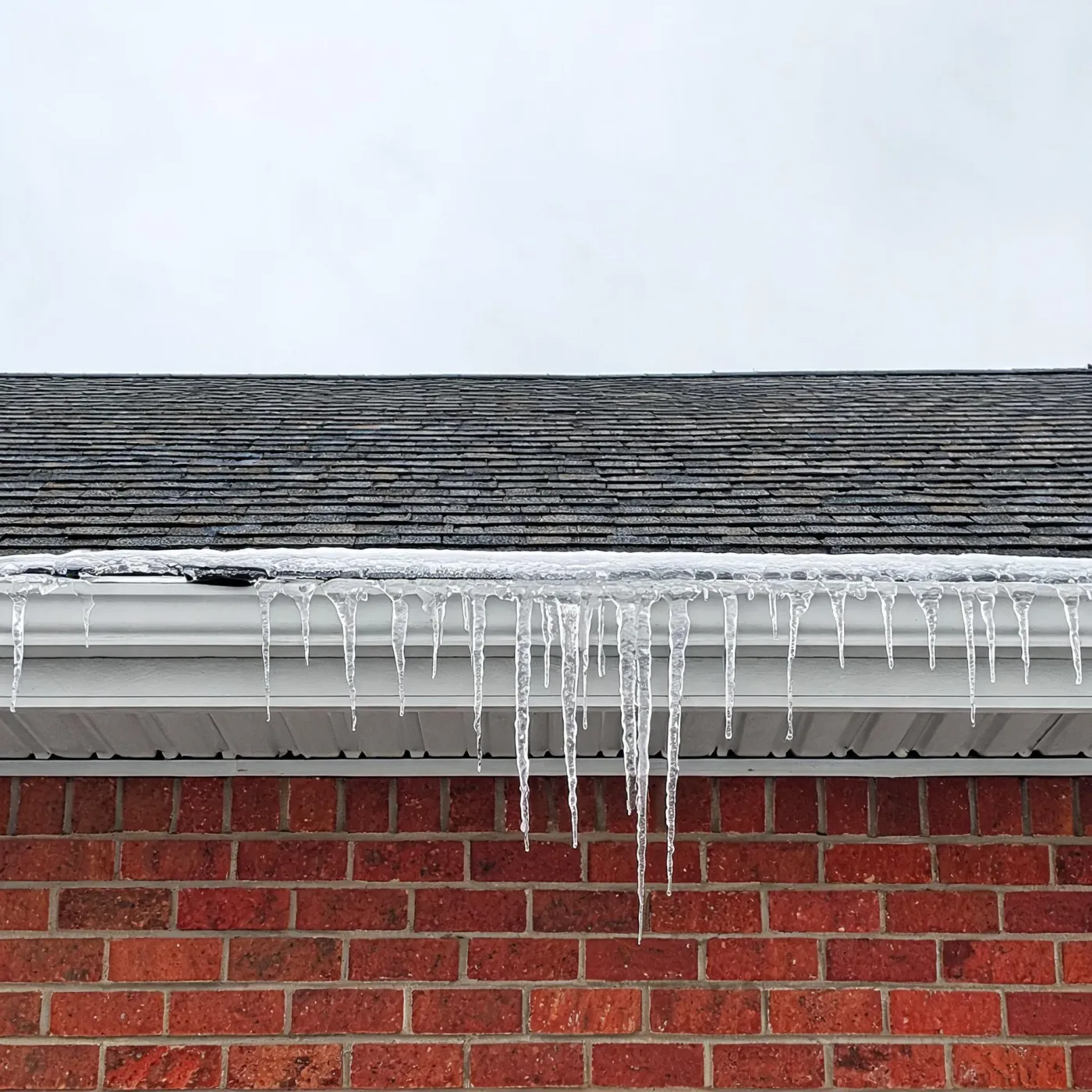
Icicles hang from a white gutter and fascia below an asphalt shingle roof above a red brick wall, under an overcast white sky.

Winter nights average 19°F across Michigan, according to NOAA climate data. At that temperature your boiler is firing often, pushing hot water through every radiator in the loop to keep up. That's exactly when a trapped air pocket shows up as a cold radiator, because the burner is working hard enough that you'd expect every room to feel it. A furnace just pushes air through ducts, so a blocked vent is easy to miss. A boiler is different. One cold radiator on a 19°F night means water isn't reaching that room, and the rest of the house will feel the difference in how long that room stays cold compared to the others.

NOAA nClimDiv 1991-2020 county normals weighted by homes

A gray residential boiler in a basement corner with copper piping, a circulator pump, pressure gauge, blue-handled valve and gray expansion tank against a concrete block wall, next to a foil-insulated wall.
Water moves through every pipe in the loop, and the pressure gauge holds steady while the circulator pump keeps it that way.
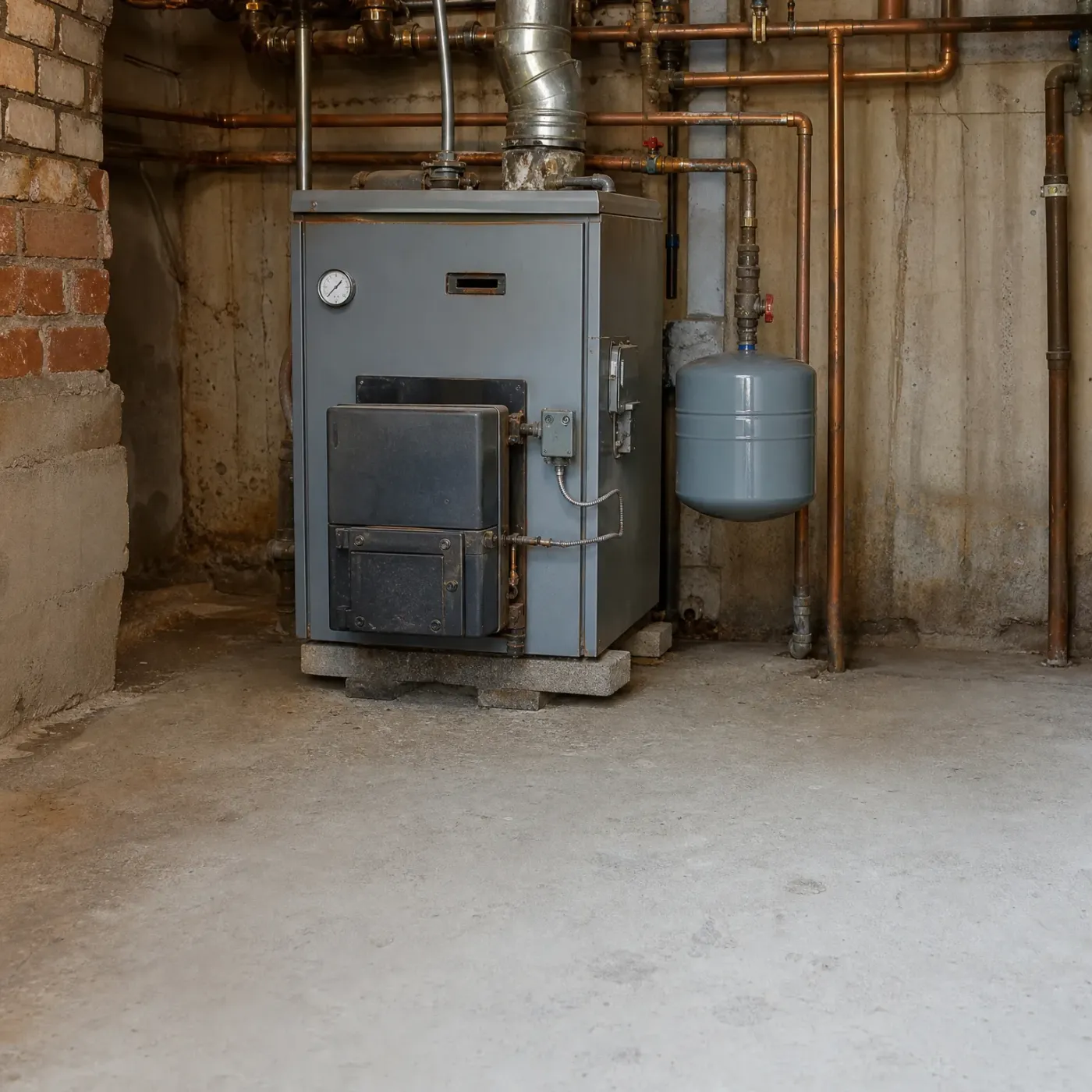
A gray boiler on a concrete block base in a basement, with copper piping, a metal flue, and a gray expansion tank mounted beside it against a concrete wall.
That gray steel casing and the open flue duct above it are common signs of a boiler old enough to be losing pressure on its own.

Why does that one room never feel warm enough

Walk past it and you'll feel the difference right away. The radiator is cool to the touch at the bottom, maybe lukewarm up top, while the one in the next room is hot all the way through. You might hear a faint gurgle or knock from the pipe when the boiler fires, then nothing. If it's a bedroom, whoever sleeps there is pulling out extra blankets or running a space heater to make up the difference, and that space heater is pulling power that costs more than the gas your boiler runs on. Left alone through a Michigan winter, that room stays uncomfortable every night the temperature drops, and the person in it is the one who feels it first.

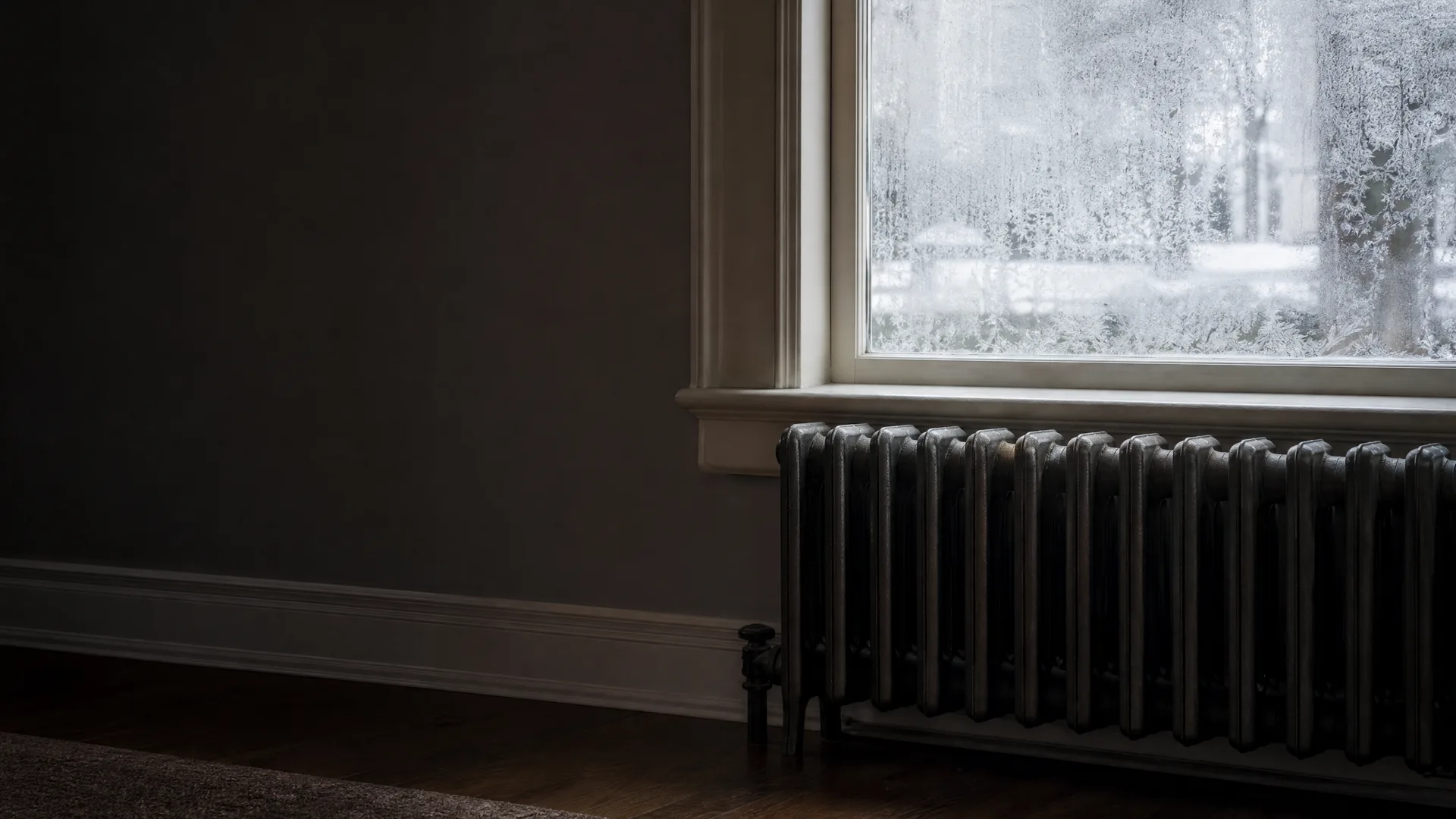
A cast iron column radiator with a valve stands beneath a window with a frosted pane showing snowy trees outside, in a dim room with dark walls and wood flooring.

The window glass has frost on the inside, feathered up from the sill, and the radiator under it is doing nothing to stop it. It's just past six, still dark out, and the house is quiet except for the boiler running somewhere below. You put a hand flat on the top of the radiator and then the bottom, and both are cold. Everywhere else in the house the air already feels warm. Here the cold just sits against the glass and settles into the floor. You pull your robe tighter and stand there a second, listening for the knock or gurgle that might explain it, but the radiator stays silent, and so does the room.

Winter nights average 19°F statewide

At 19°F overnight, that radiator has to give up its heat fast, and a cold one can't give up anything. The rooms around it stay warm enough to keep the thermostat satisfied, so the boiler doesn't fire again right away, and the cold spot just sits there until morning.

NOAA nClimDiv 1991-2020 county normals weighted by homes

A cold radiator almost always comes down to trapped air, a stuck valve, or sludge sitting where water needs to flow, and none of those clear themselves. Bleeding it yourself might buy you a warm room for a while, but if it goes cold again, something upstream needs a closer look. A local boiler tech who works on these systems all winter has seen that exact cold radiator more times than you'd guess, and usually knows within a few minutes which of the three it is. Send the request and you're handed to one licensed contractor near you, not a list of companies competing for your callback. That's one visit, one person who knows your system by the time they leave, and a warm room again instead of a space heater running in the corner through the rest of January.

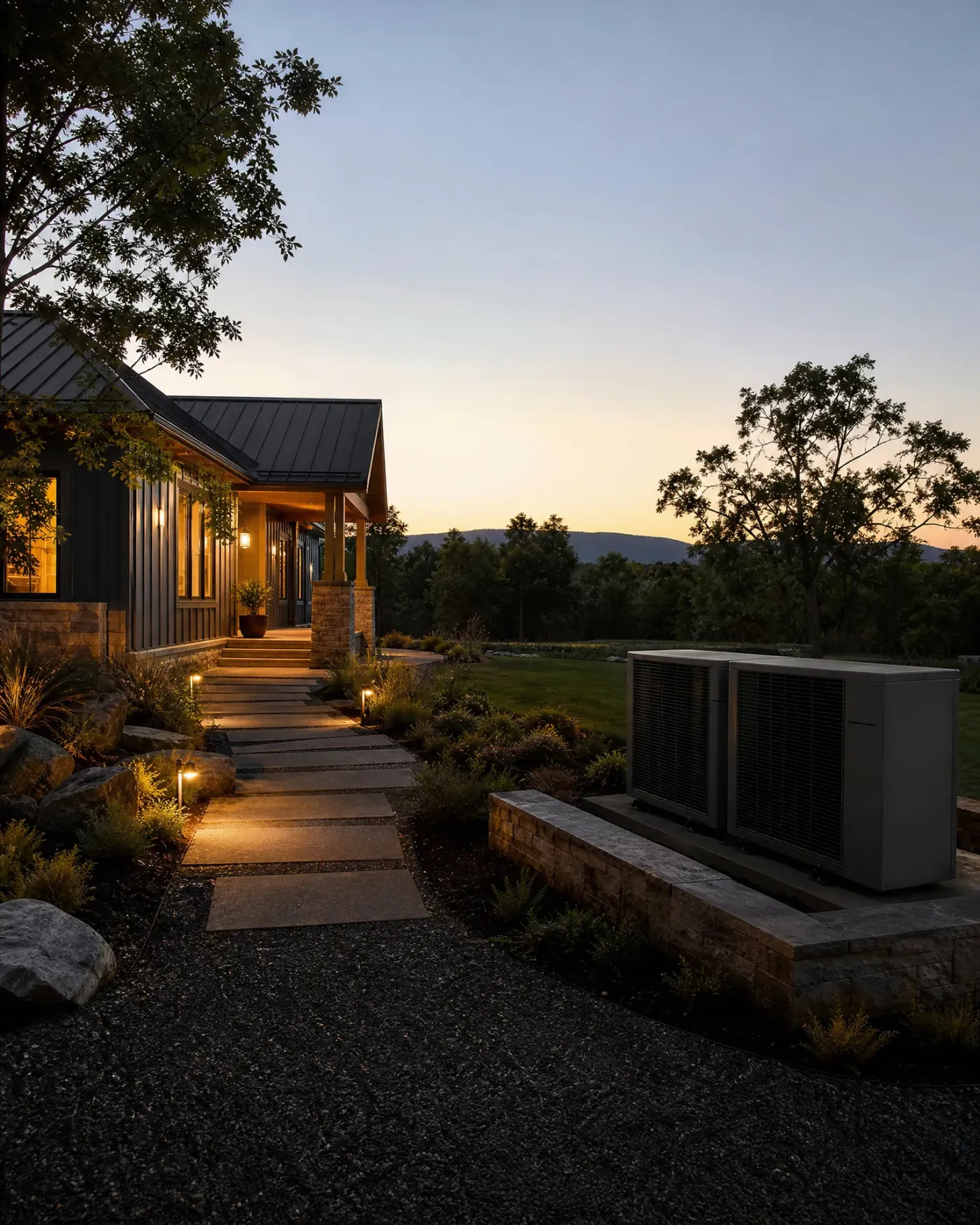
At dusk, a dark board-and-batten house with a standing-seam metal roof and lit entry walkway of stone pavers, with two large outdoor heat pump units on a stone-walled pad at right and trees and hills in the background.

Boiler Repair

Hand off the boiler problem

Step 1 of 3: Equipment
  • A cream chunky cable-knit throw draped over a beige upholstered armchair beside a bright window, with a wooden side table holding a book and a vase of leafy branches at left.
    • Say what's going on with your boiler, and a pro who works on them reaches out.
    • A local pro who knows boilers gets your details and gets in touch.
  • Living room corner with a gray sofa holding beige pillows and a knit throw, a round wooden coffee table with a dark planter and shallow bowl, a jute rug, a floor lamp, a framed landscape print on the wall, and a window showing trees.
    • One request and the search for a pro is handled.
    • Send it once and finding someone is no longer on you.
  • A living room corner with a cream sofa and cushion, knit throw, wooden coffee table holding a shallow bowl and dark ceramic vase with green foliage, a floor lamp, potted plant in a woven basket, and linen curtains at a window.
    • Skip searching for a boiler pro and answer a few questions instead.
    • One form replaces the calls you'd make to find a boiler pro.
  • A round reclaimed-wood coffee table with a black metal base sits on a woven rug in front of a cream sofa with cushions, with a lit built-in fireplace and a tall indoor tree in the background.
    • Only one pro gets your request, so you hear from one company.
    • Your request stays with one local pro.