Profile view of a bearded man wearing a dark green baseball cap and a dark gray T-shirt against a plain light background.

Why your boiler makes a banging noise in Michigan

Step 1 of 3: Equipment

That banging usually means kettling. Water inside the heat exchanger is boiling into steam pockets because something is restricting flow, often mineral buildup or sludge sitting at the bottom where the burner heats the water hardest. The trapped steam collapses and knocks against the metal, and you hear it as a bang or a series of them, sometimes right when the burner fires. It can also be air trapped in a radiator or the system's piping, which makes a similar noise as water moves past it, though that one is usually quieter and comes from the radiators themselves rather than the boiler. With Michigan winters asking a lot of your boiler for months at a stretch, a kettling boiler is working harder than it should and running hotter at the exchanger, which shortens its life if it keeps going. It is not a noise to live with. A licensed heating contractor can tell which one it is and flush or bleed the system accordingly.

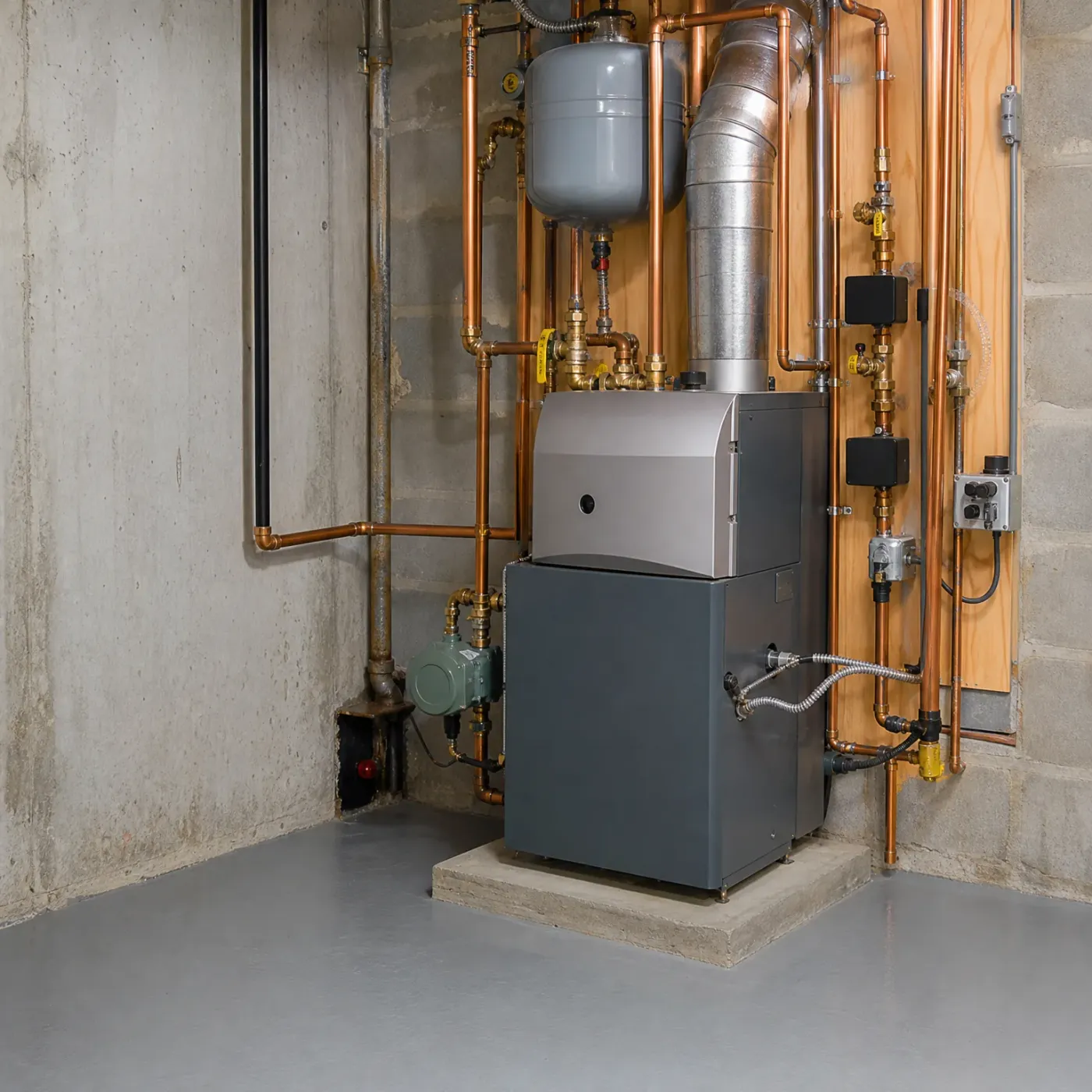
A gray floor-standing boiler in a basement corner with copper piping, two red circulator pumps, a beige expansion tank, white PVC vent pipes, concrete and plywood walls.
Quiet runs, steady pressure gauge, no clanking as the water moves through the copper lines.
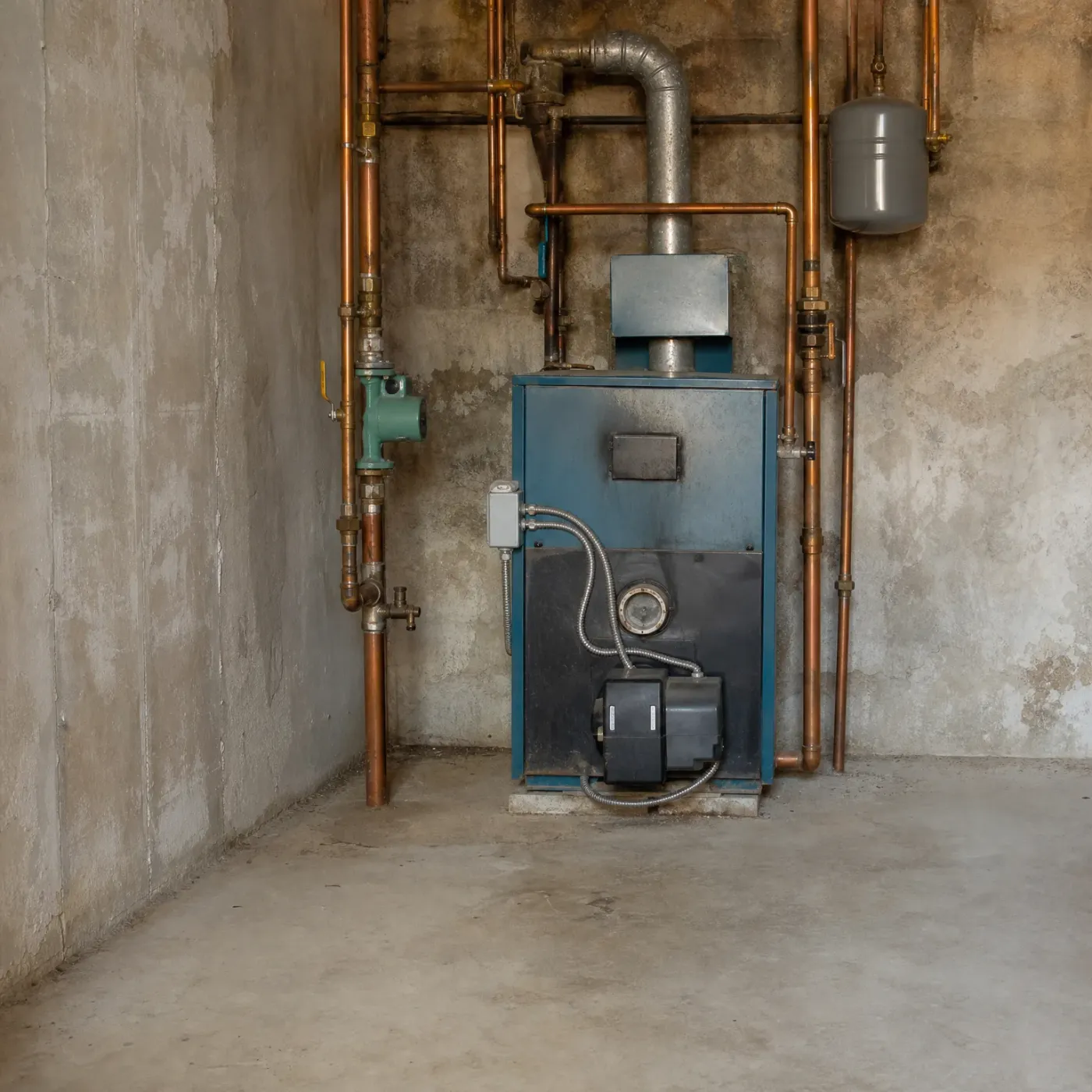
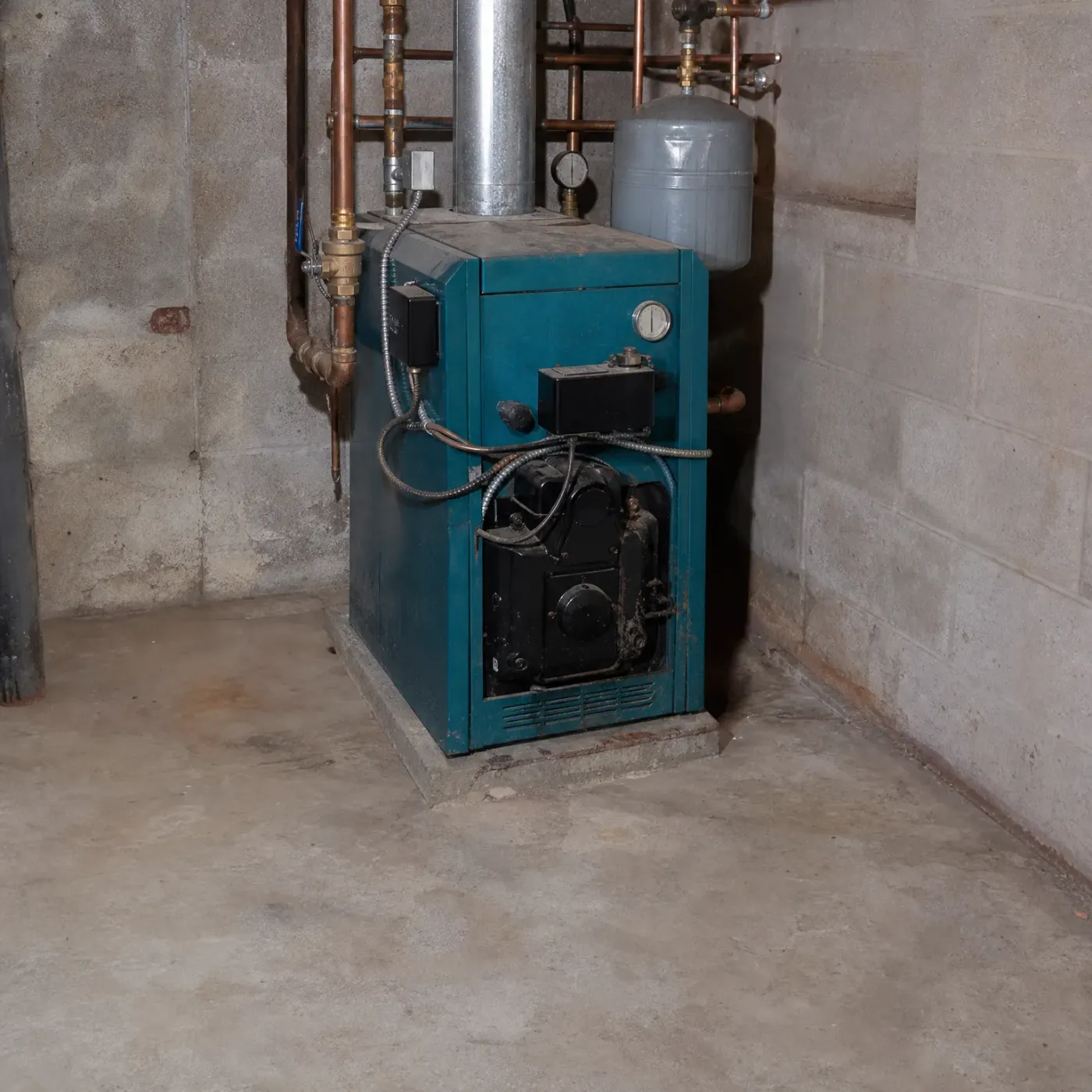
A blue residential boiler with a metal flue, pressure gauge and burner unit stands against a stained concrete basement wall, surrounded by copper pipes, a green circulator pump and a gray expansion tank.
Buildup at the bottom of the exchanger is where the banging starts, right over the burner.
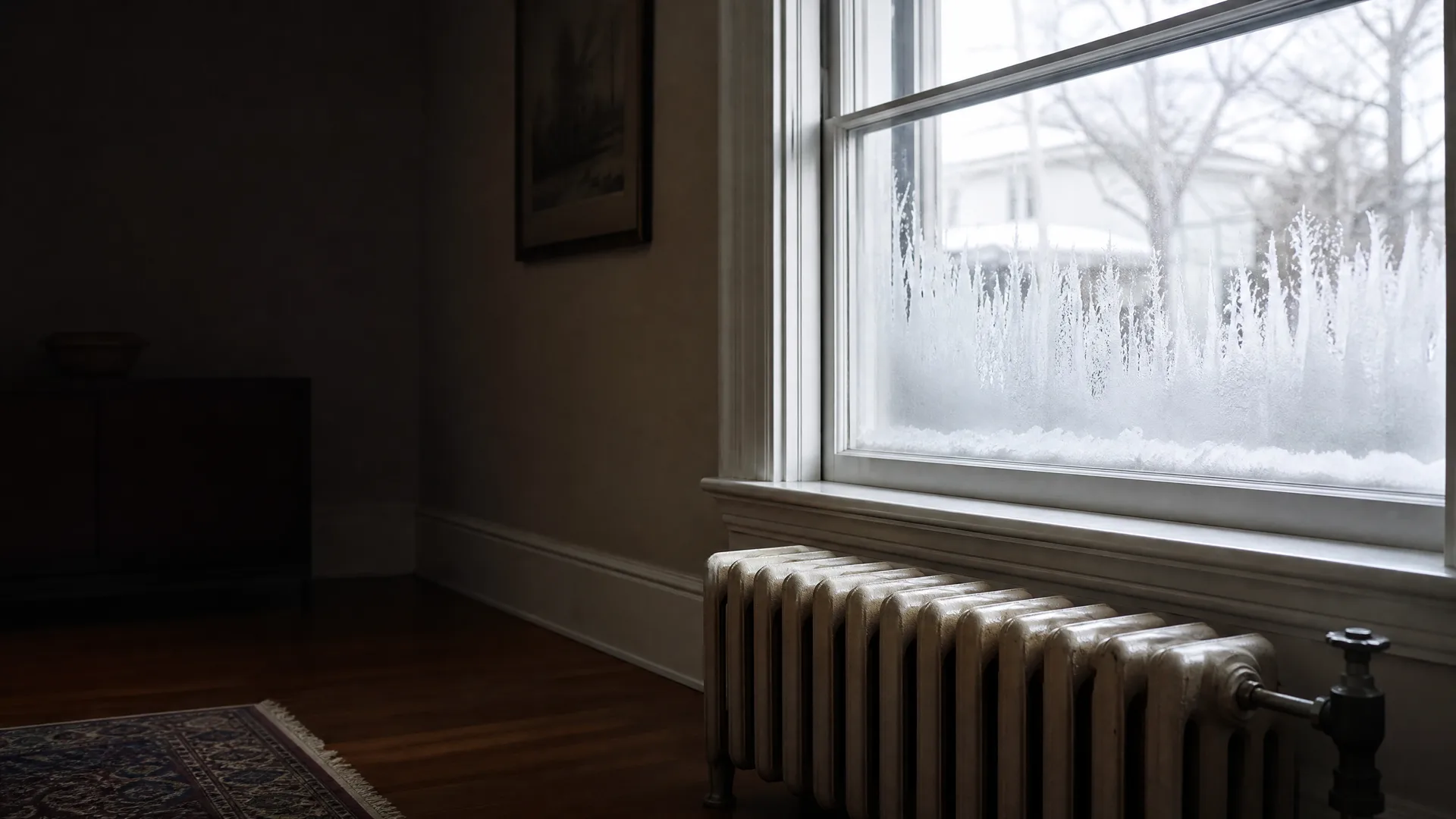
A cast-iron radiator with a valve sits beneath a frost-covered window in a dim room with dark wood floor, a patterned rug, a framed picture, and a low cabinet.

You're up before the furnace schedule even kicks the boiler on, and the radiator under the window is already banging, three or four knocks in a row like someone hit the pipe with a wrench. Outside it's still dark, maybe ten below with the wind off the lake, and the inside of the glass has that thin sheet of ice across the bottom corner. You put a hand near the cast iron and it's barely warm. The dog lifts its head at the noise, then puts it back down. You stand there in socks on the cold floor waiting to see if it's going to bang again before you decide whether to go back to bed or go check the basement.

Is the banging in your boiler actually a problem

You'll hear it most on the first cold mornings, when the boiler is working hardest to bring the house up to temperature. The knocking comes from the pipes near the boiler itself, not out at the radiators, and it gets louder the longer the burner stays on. Some homeowners notice a faint burnt smell too, which usually means the water level over the burner has dropped enough that the metal above it is running hotter than it should. Left alone, that sediment keeps hardening against the heat exchanger wall. The boiler has to burn longer to push the same heat through, your gas bill climbs, and the exchanger itself wears toward a crack rather than a simple descale.

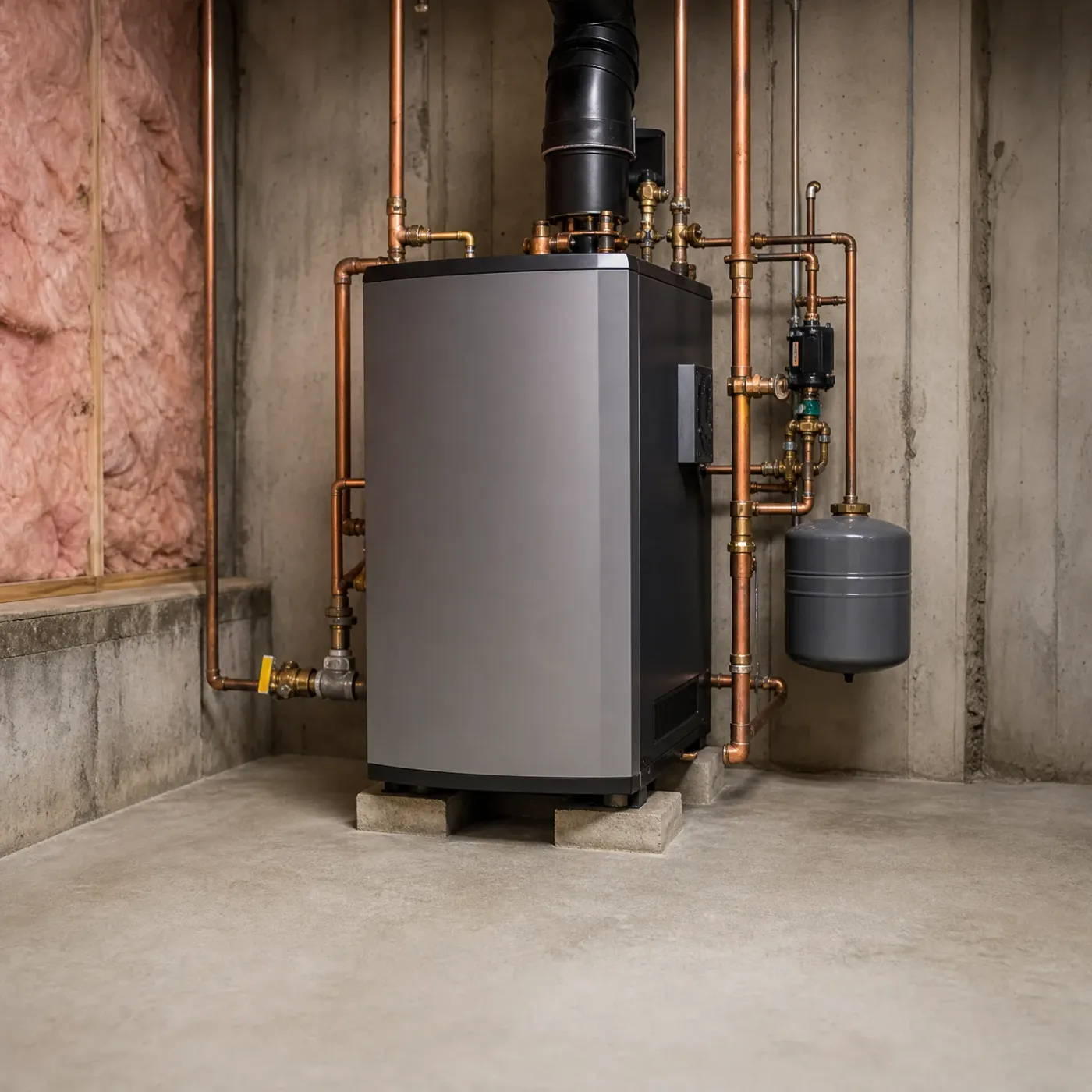
A gray and black boiler unit sits on concrete blocks in a basement corner, connected to copper piping, valves, a black flue duct, and a gray expansion tank, with bare concrete walls and exposed pink insulation at left.

Running the way it should

Water moves through the copper lines without a sound, the circulator pump hums along, and the gauge holds steady. Heat exchangers built up with scale can't do this. Clean ones carry heat away from the burner as fast as it's made.

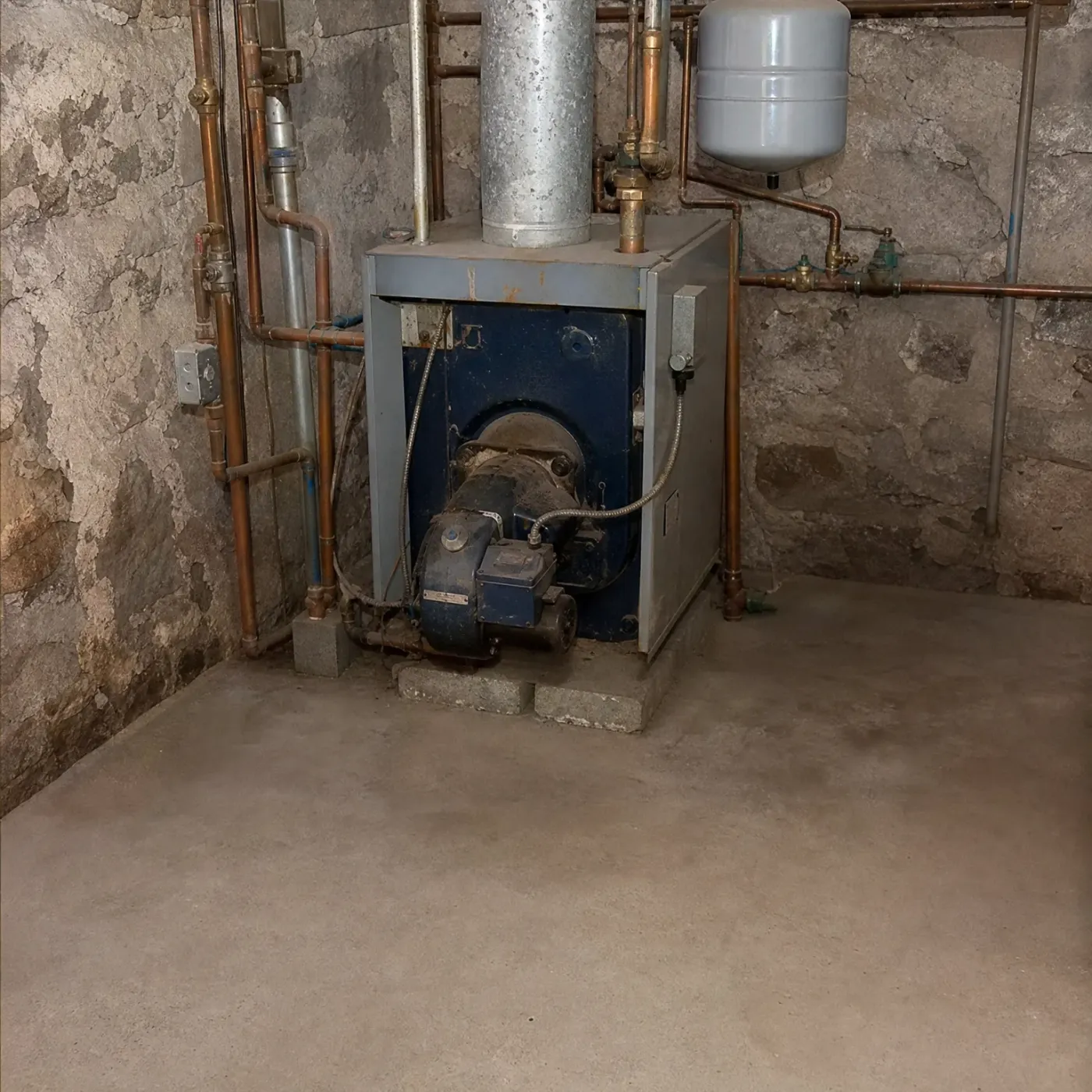
An oil-fired boiler with a blue and gray cabinet and burner sits on concrete blocks in a basement corner with stone walls, connected to copper pipes, a metal flue, and a wall-mounted expansion tank.

Sitting on borrowed time

This one's propped on concrete blocks in a Michigan basement, flue pipe going up to the chimney, and nobody's touched that exchanger in years. Sludge collects at the bottom first, right over the flame, which is exactly where kettling starts.

Flush It or Open It Up

Flush and bleed

  • A contractor can drain the system and flush the heat exchanger to clear the sludge sitting at the bottom where the burner heats hardest.
  • Bleeding the radiators afterward gets rid of trapped air that can also cause knocking as water pushes past it in the lines.
  • This works when the buildup hasn't scaled onto the exchanger walls, just loose sediment moving through the water.
  • A local contractor who services boilers all winter in Michigan has likely flushed exchangers dealing with this area's hard water before.
  • It's less work than a repair that opens up the exchanger itself, and it can be done in one visit.
  • If the banging comes back within a season or two, it usually means the deposits were already harder than a flush could reach.

Descale or replace exchanger

  • If scale has hardened onto the exchanger walls, a flush won't touch it, and the contractor has to descale it with a chemical treatment or pull it for mechanical cleaning.
  • A heat exchanger that's scaled through in spots, not just coated, usually needs replacing rather than cleaning.
  • This is more work than a flush, since the contractor has to access the exchanger directly rather than just running water through the system.
  • Someone who works on boilers in Michigan every winter will know from the banging pattern and the water here whether scale has likely hardened that far.
  • Replacing the exchanger costs more than a flush, but it stops the kettling at the source instead of buying a season or two before it returns.
  • Skipping this when scale has hardened risks the exchanger cracking from the stress of steam pockets forming against the metal.
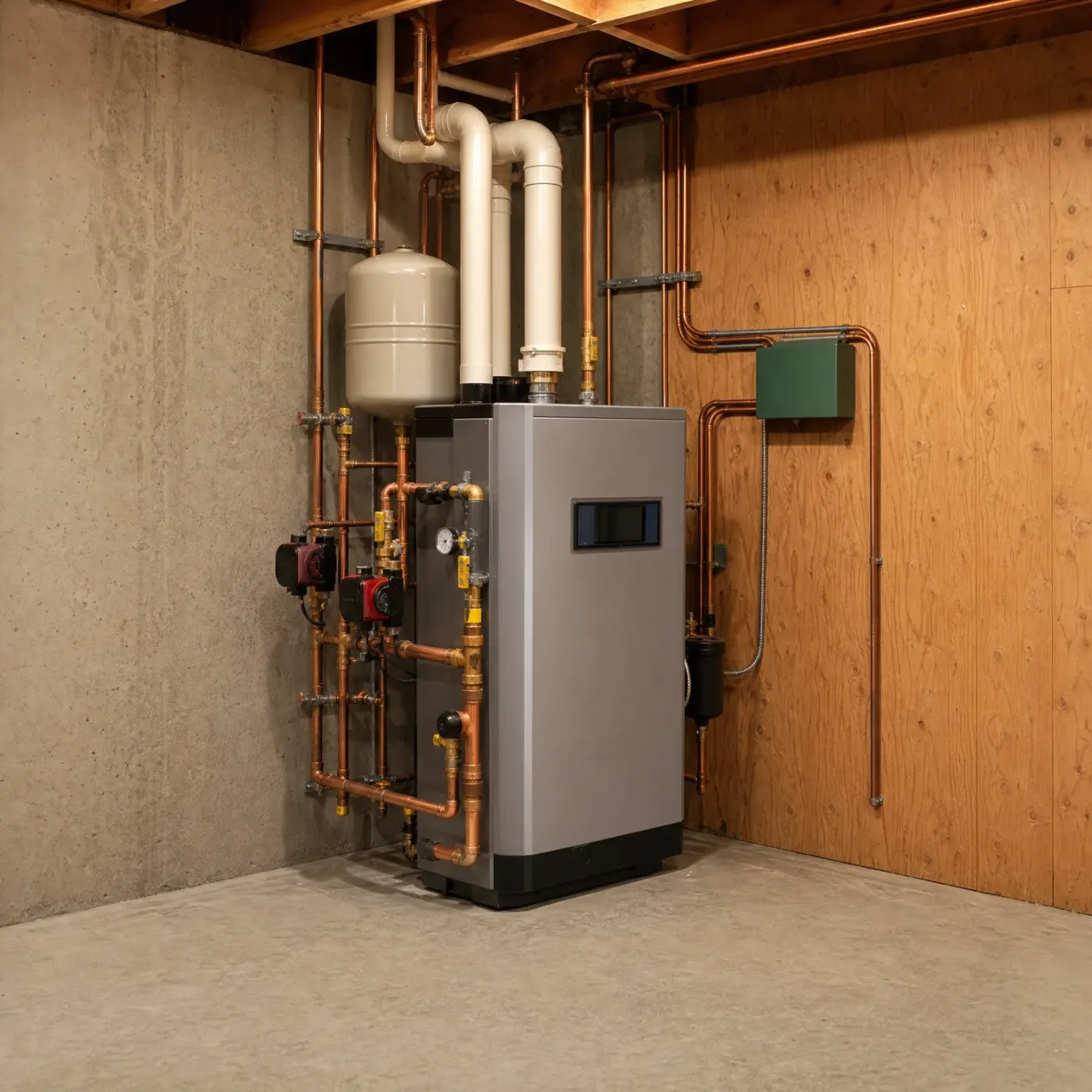
A teal boiler with a pressure gauge and black burner unit sits on a concrete pad in a basement corner, with copper pipes, a flue vent, and a gray expansion tank above against concrete block walls.
Before you get your boiler repair
A gray residential boiler on a concrete pad in a basement corner, connected to copper piping, an expansion tank, circulator pumps and insulated flue ducting against concrete and plywood walls.
After you get your boiler repair

No phone calls to make

A banging boiler in the middle of a Michigan winter isn't something to sit on. Kettling means the heat exchanger is working against buildup, and that gets worse, not better, on its own. What you don't need right now is to spend an evening calling around, explaining the knocking sound three different ways to three different companies, then sitting on quotes trying to guess who actually knows boilers versus whoever picked up the phone. Submit the request here and it goes to one licensed contractor working in your area, someone who hears this exact banging from heat exchanger buildup every winter and knows where to look first. No juggling calls back from five companies at once, no retelling the story each time. With gas heat running your boiler hard through a Michigan winter and power costing what it does here, a knocking heat exchanger isn't the direction you want that bill heading. Get it in front of someone who can look at it.

  1. Mineral scale or sludge settles at the bottom of the heat exchanger.

  2. The burner heats that spot harder than the water can carry heat away.

  3. Water trapped against the buildup flashes into small steam pockets.

  4. Cooler water around them collapses those pockets almost instantly.

Winter nights average 19°F statewide

On a 19°F night your boiler is running long and often to keep up, and that's exactly when buildup at the bottom of the heat exchanger gets hit hardest by the burner. The colder it gets outside, the more that banging shows up.

NOAA nClimDiv 1991-2020 county normals weighted by homes

A middle-aged woman with shoulder-length dark hair, wearing a gray cardigan over a cream top, sits in an upholstered armchair and looks toward a sunlit window, with a shelf holding framed pictures and a plant behind her.
A woman with her hair in a bun holds a sleeping young child against her chest, both wrapped in a textured beige knit blanket on a sofa in a dimly lit room with a lamp, framed picture, and bookshelf behind them.

What the banging is telling you

  • Banging from the boiler is kettling, caused by scale or sludge sitting at the bottom of the heat exchanger.
  • The noise shows up worst on the coldest mornings because the burner is working hardest right over that buildup.
  • Left alone, the buildup doesn't clear itself and the burner keeps heating against it harder each winter.
  • A flush clears the sludge from the heat exchanger, and bleeding the radiators clears trapped air that knocks the same way.
  • A licensed Michigan contractor who services boilers all winter can tell kettling from an air problem by where the noise is coming from.
  • Getting it looked at now means one call instead of several, and a straight answer on what's actually banging.

The knock you're hearing is water trying to move past buildup it shouldn't have to fight. Scale and sludge settle at the bottom of the heat exchanger, right where the burner puts out the most heat, and the water sitting against that buildup turns to steam pockets that collapse against the metal. That's the banging. It isn't random and it isn't the boiler settling in for the night. It shows up hardest on the coldest mornings because that's when the burner runs longest and hits that same spot the most. A ten below morning with the wind off the lake will bring it out faster than a mild one, but the buildup is there year-round, getting a little thicker each winter the system runs this way. It doesn't wear off or flush itself out between heating seasons. The burner just keeps working against it, and the banging keeps coming back, usually a little sooner each time the cold sets in. A flush clears the sludge from the bottom of the exchanger. If what you're hearing is air instead, a contractor can tell the difference by where the sound is actually coming from, the boiler itself versus the radiators out in the house, and bleed the lines instead. Either way it's one visit, one person who already knows what a Michigan boiler sounds like when something's wrong with it, and a straight answer instead of a guess. The banging isn't dangerous tonight, but it isn't going to fix itself either.

A gray-haired man in a dark sweater sits on a light gray sofa in a living room, looking toward a sunlit window with trees outside.
A gray-haired man in a dark blue sweater sits on a light gray sofa in a sunlit living room, looking off to the side, with a potted plant, shelving unit, and large glass doors behind him.
A bearded man with graying hair in a dark green sweater sits on a sofa in a living room, looking off to the side, with a sliding glass door and a dim kitchen doorway behind him.
A gray-haired man in a dark knit sweater sits on a light gray sofa in a living room, looking toward a sunlit window, with houseplants, a lamp, and framed art in the background.

One form, no calling around

A banging boiler is a flush and inspection job, and a contractor who works on these systems all winter knows where the buildup sits and what to check first. Submit your request here and it goes to one licensed, local contractor, not a handful of companies calling you back. You skip the searching, the calling around, and explaining the same banging noise more than once. One contractor, already familiar with Michigan boilers, takes it from there.

Skip the search

Your request stays with one local pro.

No charge to send it. You decide if you hire them.