Tell us about the job
Takes about a minute. No obligation.
A contractor diagnosing a boiler repair in Grand Traverse County works through a short list of familiar culprits: heat exchanger wear, failed controls, and sediment buildup from years of regular cycling. 78 severe weather events were recorded in Grand Traverse County, Michigan between 2015 and 2024. At roughly that rate, severe weather is an event here, not a standing condition, which means the climate record carries little weight as an explanation when a system fails. What a contractor finds inside an aging boiler tells the real story, and it is usually one of neglected maintenance or a component that simply ran its course.
Boilers in housing this old are frequently running on components that have cycled through multiple supply chains since they were first installed. Half the homes in Grand Traverse County, Michigan were built in 1986 or earlier (2020-2024 ACS 5-year). When a contractor opens the unit, the question that determines the repair scope is whether the part it needs still exists in the supply chain or has to be sourced from salvage. If the answer is salvage, the timeline and the bill both change. That is the variable worth asking about before the work begins.
The Parts of a Boiler a Contractor Checks First
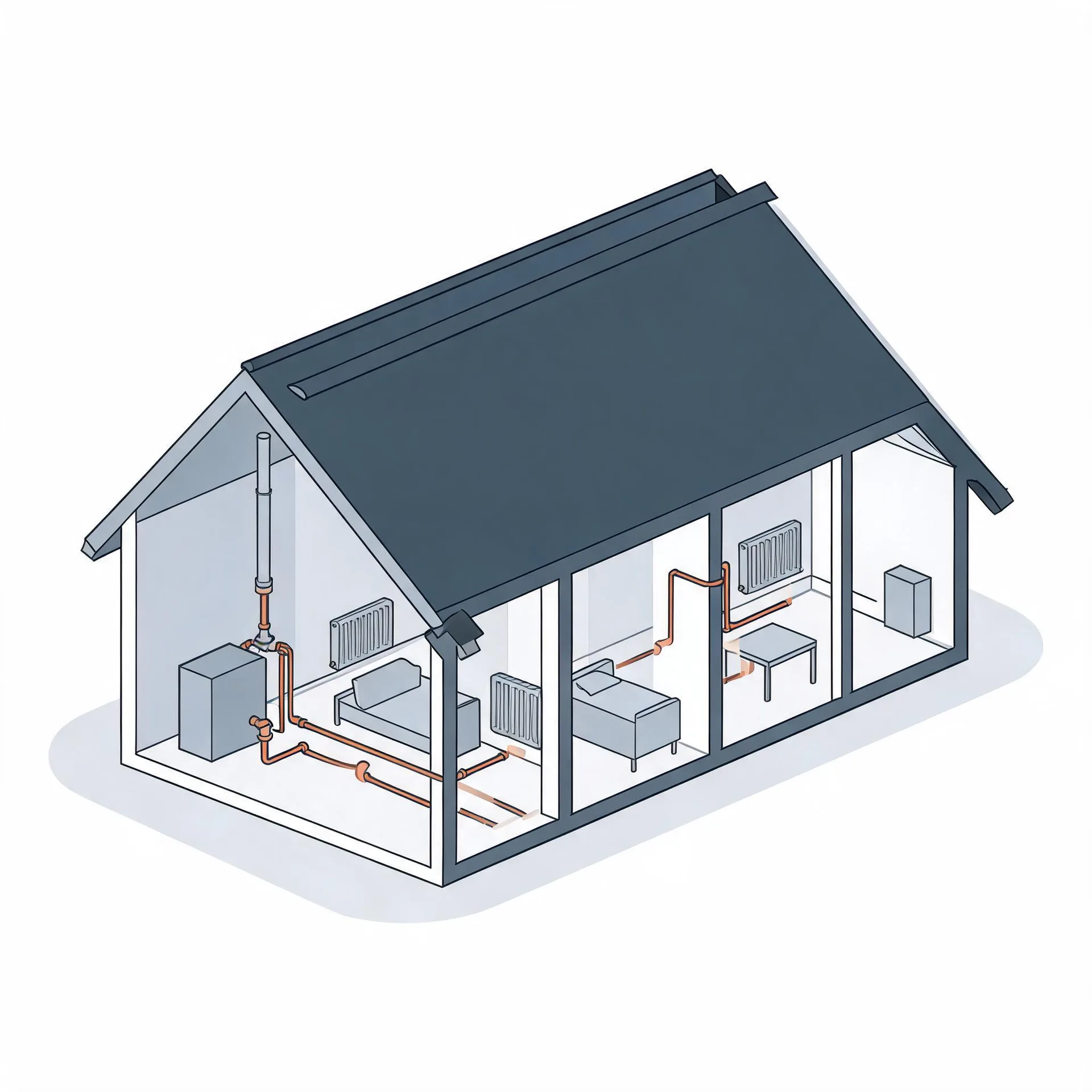
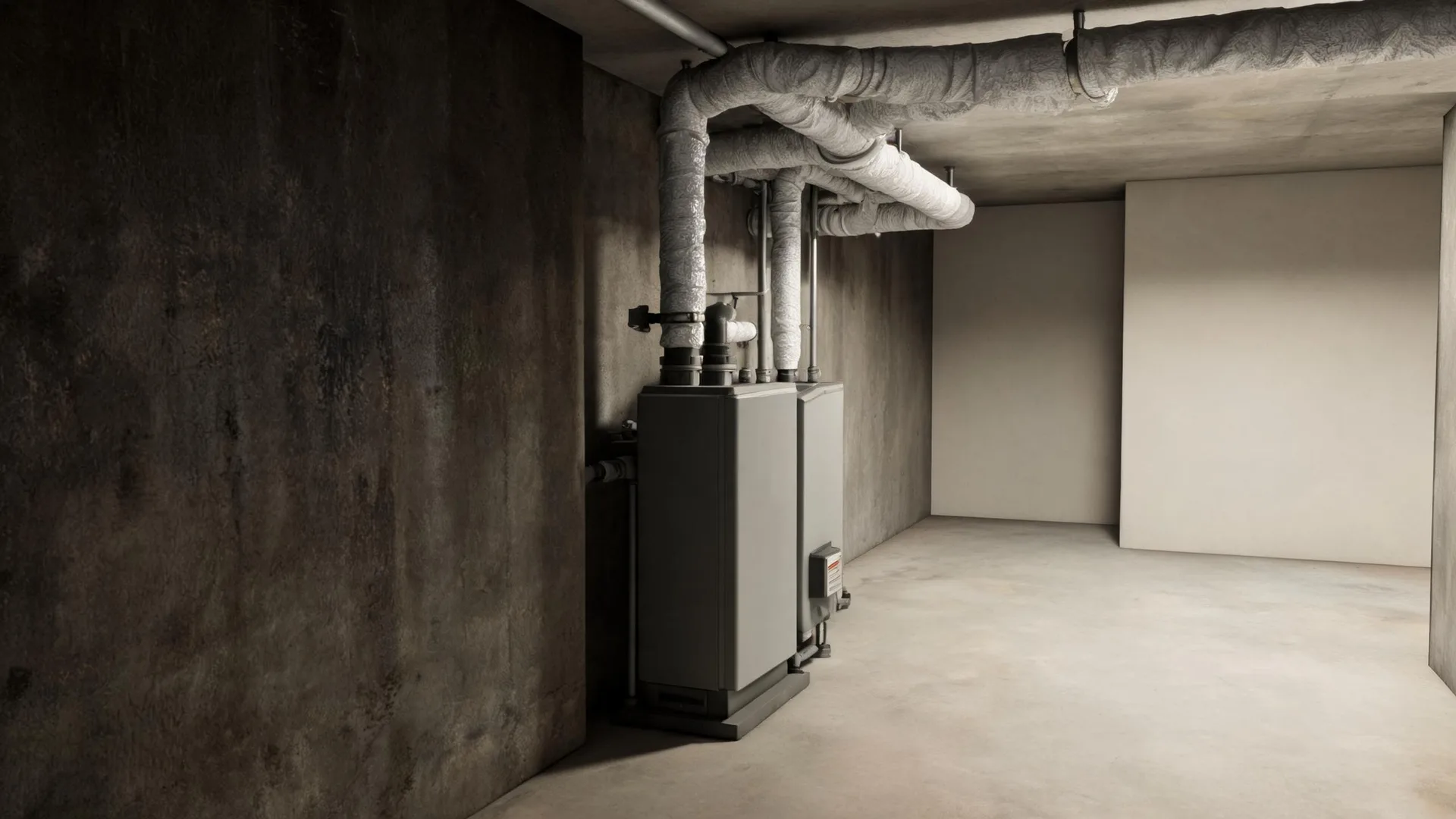
The boiler itself sits in the basement or a mechanical room and is the piece a contractor goes to first. Inside it, the heat exchanger is where combustion gases transfer heat to the water, and a crack or buildup there shows up as uneven heat or worse. The burner and ignition assembly, which sit just below the heat exchanger, are common sources of no-heat calls.
From the boiler, a circulator pump pushes hot water through the supply pipes to the radiators or baseboard units in each room, then draws the cooled water back through the return line. The expansion tank, usually hanging near the boiler, absorbs pressure swings in that loop, and a failed one will cause the pressure relief valve to weep. The thermostat on the wall ties it all together by signaling the boiler when to fire.
The drawing shows the general layout of a boiler system, and a licensed contractor determines which components and conditions apply to this particular house.
Find a contractor in Grand Traverse CountyGrand Traverse County, by the numbers
78 severe weather events were recorded in Grand Traverse County, Michigan between 2015 and 2024.
NOAA National Centers for Environmental Information, Storm Events Database, bulk CSV export, events 2015-01-01 through 2024-12-31.Half the homes in Grand Traverse County, Michigan were built in 1986 or earlier (2020-2024 ACS 5-year).
U.S. Census Bureau, 2020-2024 American Community Survey 5-Year EstimatesGrand Traverse County, Michigan holds 47,003 housing units (2020-2024 ACS 5-year).
U.S. Census Bureau, 2020-2024 American Community Survey 5-Year EstimatesOwners occupy 77.2% of the occupied homes in Grand Traverse County, Michigan (2020-2024 ACS 5-year).
U.S. Census Bureau, 2020-2024 American Community Survey 5-Year EstimatesBoiler Repair Rules & Standards for Grand Traverse County, Michigan2 sourced codes and standards
Licensing Rules for HVAC Repair in Grand Traverse County, Michigan
Michigan issues the mechanical contractor’s licence by classification: HVAC equipment, ductwork, refrigeration, hydronic heating and cooling, and limited or unlimited heating and refrigeration service are each a separate classification a contractor has to hold.
Michigan requires a mechanical contractor’s licence: nobody may install, alter or service the regulated mechanical work unless they, or an employee, hold a licence from the department that has not been revoked or suspended.
Severe Weather Events in Grand Traverse County
Boilers work hardest when outdoor conditions put the most stress on a home. How often that happens in Grand Traverse County shapes how hard local equipment is pushed and how quickly wear accumulates.
78 severe weather events, 2015–2024. Source: NOAA National Centers for Environmental Information, Storm Events Database.